

Premenstrual dysphoric disorder (PMDD) is a severe, hormone‑sensitive mood disorder that causes intense emotional, mental, and physical symptoms in the week or two before your period and then eases once bleeding starts. If you’ve been wondering “what is premenstrual dysphoric disorder” and why it can feel so life‑disrupting, this guide will walk you through symptoms, causes, diagnosis, treatment options, and practical self‑care so you can better understand what’s happening and what you can do next.
What is Premenstrual Dysphoric Disorder?
Premenstrual dysphoric disorder (PMDD) is a much more severe form of premenstrual syndrome (PMS) that affects mood, thinking, and daily functioning during the luteal phase—the time between ovulation and the start of your period. People with PMDD experience intense mood swings, depression, anxiety, irritability, and physical symptoms that are strong enough to interfere with work, relationships, and everyday life.
Symptoms usually begin about 7–14 days before menstruation, peak in the days just before your period, and improve within a few days after bleeding starts, with little to no symptoms in the week after your period. Because of this clear monthly pattern, PMDD is classified as a cyclical mood disorder tied to hormonal changes rather than a constant, year‑round condition like major depressive disorder.
PMDD vs. PMS: How Are They Different?
PMS and PMDD share some of the same physical and emotional symptoms, but they differ in severity and impact on your life. Many people with periods have mild PMS—bloating, breast tenderness, irritability—that is uncomfortable but manageable, while PMDD symptoms are so intense they can feel overwhelming or even disabling.
In PMDD, at least one core mood symptom—such as marked sadness, anxiety, or irritability—must stand out and significantly disrupt daily activities and relationships. People with PMDD may miss work or school, avoid social interactions, or struggle to care for themselves or their families during this part of the cycle, which is not typical of milder PMS.
Key Differences Between PMS and PMDD
| Feature | PMS | PMDD |
| Symptom intensity | Mild to moderate discomfort. | Severe, often debilitating symptoms. |
| Impact on functioning | Usually able to work and socialize. | Marked impairment at home, work, and in relationships. |
| Core mood symptoms | Irritability, moodiness may occur. | Extreme mood swings, intense sadness, anxiety, or anger. |
| Duration | 5–11 days before period, improves with bleeding. | 7–14 days before period, resolves shortly after bleeding; symptom‑free interval after. |
Common Symptoms of PMDD
PMDD symptoms vary from person to person, but they are typically grouped into emotional, physical, and cognitive/behavioral categories. You don’t need to have every symptom to meet criteria, but several of them must appear in the premenstrual phase and ease after your period starts.
Emotional and Behavioral Symptoms
- Severe mood swings or feeling suddenly sad or tearful.
- Marked irritability or anger, often leading to conflicts with others.
- Feelings of hopelessness, worthlessness, or deep depression.
- Heightened anxiety, tension, or feeling “on edge.”
- Decreased interest in usual activities, social withdrawal, or feeling disconnected.
Some people also report intense self‑criticism, sensitivity to rejection, or feeling overwhelmed by everyday tasks during this time. In severe cases, thoughts of self‑harm or suicide can occur and require urgent attention.
Physical Symptoms
- Severe fatigue or lack of energy.
- Breast tenderness or swelling.
- Headaches or migraines.
- Bloating, changes in appetite, or digestive issues (constipation or diarrhea).
- Muscle or joint pain and general body discomfort.
These physical symptoms often look like PMS but feel more intense and harder to ignore, especially when combined with emotional distress.
Cognitive and Functional Symptoms
- Difficulty concentrating or “brain fog.”
- Feeling out of control or overwhelmed by responsibilities.
- Trouble sleeping—either insomnia or needing much more sleep than usual.
Because symptoms repeat most cycles, many people start to dread this part of the month, which can further fuel anxiety and emotional distress.
What Causes PMDD?
The exact cause of PMDD isn’t fully understood, but it’s not “all in your head.” Researchers believe that people with PMDD have an abnormal or heightened sensitivity to the normal hormonal changes that occur during the menstrual cycle.
Fluctuations in estrogen and progesterone appear to influence brain chemicals like serotonin, which plays a major role in mood, sleep, and pain perception. In PMDD, these hormonal shifts may trigger large mood swings, emotional distress, and physical symptoms in individuals who are especially sensitive to them.
Risk Factors
Certain factors may make PMDD more likely:
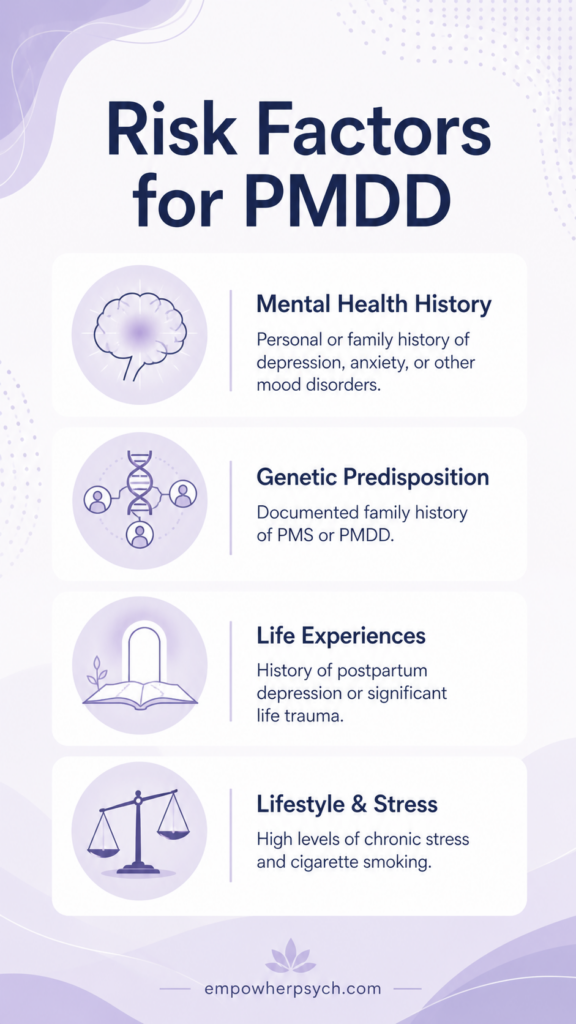
- Personal or family history of depression, anxiety, or other mood disorders.
- Family history of PMS or PMDD.
- History of postpartum depression or trauma.
- Cigarette smoking and high stress levels.
Having these risk factors doesn’t guarantee you’ll develop PMDD, but they may help explain why some people are more affected by hormonal shifts than others.
How PMDD Is Diagnosed
There is no single blood test or scan that can diagnose PMDD. Instead, healthcare providers rely on a detailed history of your symptoms, how they change across the menstrual cycle, and how much they interfere with your life.
To confirm PMDD, clinicians often ask you to track your symptoms daily for at least two menstrual cycles using a calendar or app. This prospective tracking helps show whether symptoms reliably appear in the luteal phase (the week or two before your period) and improve shortly after bleeding starts, with a symptom‑free interval afterward.
Your provider may also screen for other conditions, such as thyroid problems, chronic fatigue syndrome, or year‑round mood and anxiety disorders, which can mimic or overlap with PMDD. An accurate diagnosis matters because it guides treatment—what helps PMDD may be different from what’s best for non‑cyclical depression or anxiety.
Evidence‑Based Treatment Options
PMDD is highly treatable, and many people find significant relief with a combination of medication, therapy, and lifestyle changes. The right plan depends on your symptom profile, other health conditions, and your goals (for example, whether you’re trying to conceive).
Medications
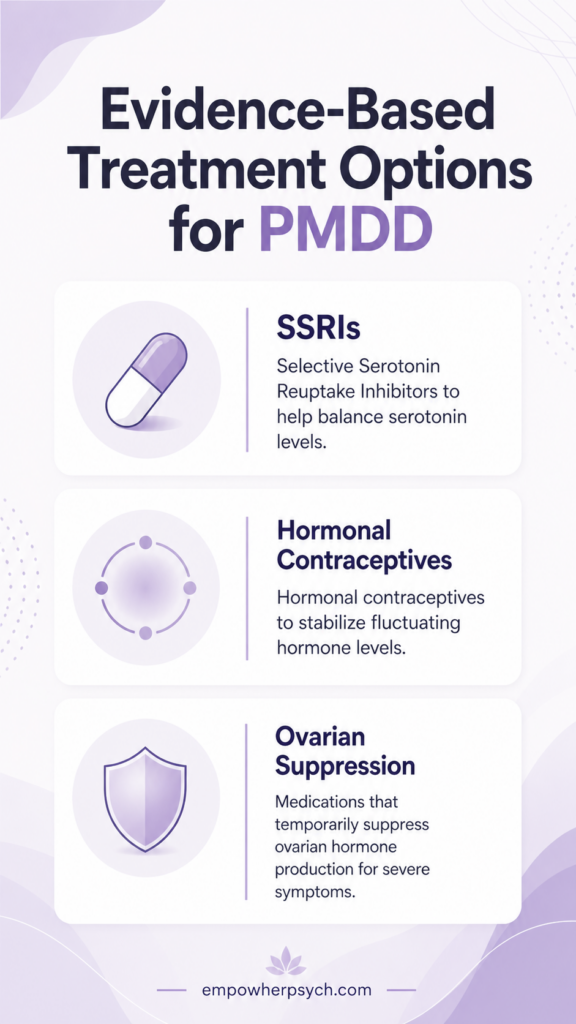
- Selective serotonin reuptake inhibitors (SSRIs). Antidepressants like fluoxetine, sertraline, and similar medications are considered first‑line treatment for moderate to severe PMDD. They can be taken every day or only during the luteal phase, and have been shown to reduce mood symptoms, irritability, and physical discomfort.health.
- Hormonal contraceptives. Certain birth control pills, especially those that limit or shorten the pill‑free interval, can reduce or stabilize PMDD symptoms by smoothing out hormonal fluctuations.
- Other options. In treatment‑resistant cases, providers may consider medications that temporarily suppress ovarian hormone production, but these are usually short‑term due to side effects and cost.
Medication decisions should always be made with a qualified clinician who can review benefits, side effects, and any interactions with other conditions or prescriptions.
Therapy and Lifestyle Approaches
Cognitive behavioral therapy (CBT) and other forms of psychotherapy can help you develop coping skills, challenge self‑critical thoughts, and navigate the relationship and work stress that PMDD can create. Evidence suggests CBT can improve both emotional and physical symptoms when used alongside medical treatments.
Lifestyle changes—such as regular physical activity, stress reduction techniques, balanced nutrition, and quality sleep—often make symptoms more manageable, especially when combined with medication and therapy. While lifestyle shifts alone may not be enough for everyone with PMDD, they are an important foundation for long‑term symptom control.
Everyday Life With PMDD
Living with PMDD can significantly affect work, school, relationships, and self‑esteem. You might feel like a completely different person for part of each month, then “snap back” once your period starts—leaving you exhausted and sometimes ashamed of what happened during your worst days.
It’s common to worry that others won’t understand or will dismiss your experience as “just PMS,” which can add feelings of isolation. Learning about PMDD, tracking your cycle, and sharing accurate information with trusted people in your life can help shift conversations from blame to support and problem‑solving.
Premenstrual Dysphoric Disorder Self Care
Self‑care for PMDD isn’t about “toughing it out”—it’s about building a realistic, compassionate plan that reduces symptom intensity and helps you feel more in control of your month. No two people experience PMDD exactly the same way, so the best self‑care plan is customized to your body, schedule, and support system.
Core Elements of a PMDD Self‑Care Plan
- Track your symptoms and triggers. Use a journal or app to note mood shifts, physical symptoms, sleep, stress, and what you eat for at least two cycles. This helps you predict your “high‑risk” days and adjust plans ahead of time.
- Nourish your body. Aim for regular meals with protein, healthy fats, and complex carbohydrates to stabilize blood sugar and mood. Some evidence supports daily calcium and magnesium, and limiting caffeine, alcohol, and high‑sugar foods that can worsen symptoms.
- Move in ways that feel manageable. Gentle to moderate exercise—walking, yoga, swimming, or dancing—can reduce tension, improve sleep, and ease depression and anxiety. Even 20–30 minutes most days can make a difference.hormoneclinic+1
- Practice stress resets. Short, daily practices like deep breathing, progressive muscle relaxation, meditation, or journaling can lower nervous system arousal and support more stable moods.
Equally important is giving yourself permission to lower expectations during the most symptomatic days—scheduling fewer commitments when possible, delegating tasks, or creating a “low‑energy” version of your routine. Over time, these adjustments can help you feel less blindsided and more prepared each cycle.
When to Seek Professional or Urgent Help
You should consider seeing a healthcare provider—ideally someone familiar with mood and reproductive mental health—if your premenstrual symptoms are causing significant distress, affecting your ability to function, or straining your relationships. A clinician can help confirm whether you meet criteria for PMDD, rule out other conditions, and work with you on a personalized treatment plan.
Seek immediate or emergency help if you have thoughts of self‑harm, suicide, or harming others at any point in your cycle, even if you expect the symptoms to pass when your period starts. PMDD‑related suicidal thoughts are a medical and psychiatric emergency, not a sign of weakness, and urgent care can be life‑saving.

You Don’t Have to Battle PMDD Alone—Take Your Next Step Today
If you’ve been wondering “what is premenstrual dysphoric disorder” because your monthly mood shifts feel extreme, unpredictable, or out of character, know that PMDD is a real, recognized condition with effective treatments and self‑care strategies. Understanding the pattern of your symptoms, how hormones affect your brain and body, and which tools actually help can turn a chaotic, dreaded part of your month into something more predictable and manageable.
You don’t have to figure this out on your own. EmpowHer Psychiatry and Wellness specializes in compassionate, evidence‑based mental health care for hormone‑related mood conditions like PMDD, and can help you build a tailored plan that may include medication, therapy, and practical self‑care support. If you’re ready to feel more in control of your cycle and your life, consider reaching out to EmpowHer today to schedule a consultation and start the process of getting real, lasting relief.
