

Depression is one of the most common mental health conditions worldwide, yet many people still struggle to access timely and consistent care. Barriers like long wait times, transportation issues, stigma, and limited local providers often delay treatment. In recent years, a major shift has changed how support is delivered: telehealth for depression.
This shift has made mental health care more flexible, more private, and in many cases, more reachable than ever before. Instead of waiting weeks or months for an in-person appointment, individuals can now connect with licensed professionals from their own homes through video calls, phone sessions, or secure messaging platforms. For many, this has become a turning point in getting help earlier and staying consistent with treatment.
Understanding how telehealth for depression works—and why it is reshaping mental health access—can help individuals make informed decisions about their care options.
What Is Telehealth for Depression?
Telehealth for depression refers to the delivery of mental health services through digital platforms. This includes therapy sessions, psychiatric consultations, medication management, and ongoing check-ins conducted remotely instead of in a traditional office setting.
These services are typically provided through:
- Secure video conferencing platforms
- Phone calls with licensed providers
- Messaging-based therapy or check-ins
- Hybrid care models combining virtual and in-person visits
At its core, telehealth for depression aims to provide the same quality of care as in-person treatment while reducing barriers that often prevent people from seeking help in the first place.
Mental health professionals can assess symptoms, provide diagnoses, guide treatment plans, and offer therapeutic interventions such as Cognitive Behavioral Therapy (CBT), all within a virtual setting.
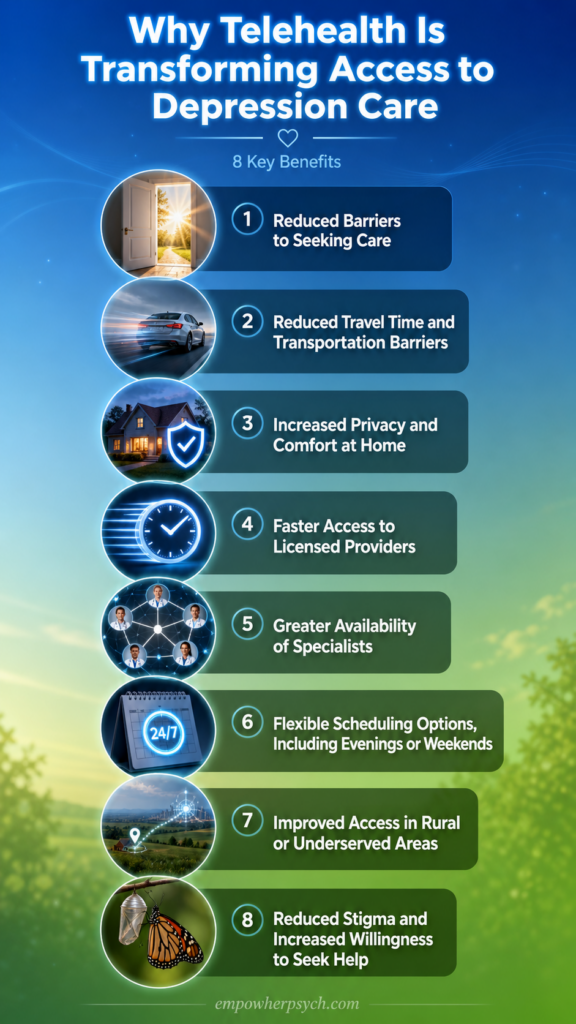
Why Telehealth Is Transforming Access to Depression Care
The rise of telehealth is not just a matter of convenience—it represents a meaningful shift in how mental health care is delivered, especially for individuals living with depression.
1. Reduced Barriers to Seeking Care
Depression often makes it difficult to leave home, maintain routines, or follow through with appointments. Telehealth helps reduce these obstacles by allowing individuals to connect with licensed providers from a familiar and comfortable environment.
2. Reduced Travel Time and Transportation Barriers
One of the most immediate benefits is eliminating the need for travel. This is especially helpful for individuals who rely on public transportation, live far from clinics, or have physical limitations that make commuting difficult.
3. Increased Privacy and Comfort at Home
Many individuals feel more at ease speaking with a provider from their own space. This sense of comfort can make it easier to open up about symptoms, emotions, and daily challenges without the added stress of a clinical environment.
4. Faster Access to Licensed Providers
In traditional settings, wait times for mental health appointments can stretch for weeks or even months. Telehealth for depression often shortens this gap, allowing individuals to begin care sooner and avoid prolonged emotional distress.
5. Greater Availability of Specialists
Virtual care expands access to a wider network of mental health professionals, including psychiatrists and therapists who may not be available locally. This is especially important for individuals needing specialized or ongoing depression care.
6. Flexible Scheduling Options, Including Evenings or Weekends
Telehealth platforms often offer more adaptable appointment times. This flexibility makes it easier for individuals who work full-time, attend school, or manage caregiving responsibilities to stay consistent with treatment.
7. Improved Access in Rural or Underserved Areas
In many rural communities, mental health services are limited or nonexistent. Telehealth for depression helps bridge this gap by connecting individuals to qualified providers regardless of location, reducing geographic barriers to care.
8. Reduced Stigma and Increased Willingness to Seek Help
Some individuals avoid in-person mental health clinics due to fear of judgment or social stigma. Virtual care provides a more discreet option, which can encourage earlier intervention, greater honesty during sessions, and continued engagement in treatment.
How Telehealth for Depression Works Step-by-Step
While platforms may differ, most telehealth systems follow a similar process. Understanding what to expect can make the experience feel more approachable.
Typical process of virtual mental health care:
- Initial intake assessment: A provider gathers information about symptoms, history, and current concerns
- Diagnosis or clinical evaluation: If appropriate, a diagnosis may be made or further assessment recommended
- Treatment plan development: This may include therapy, medication, or a combination of both
- Regular sessions: Ongoing therapy or psychiatric follow-ups are scheduled virtually
- Progress monitoring: Providers adjust treatment based on response and symptoms
Most platforms use secure, HIPAA-compliant systems to ensure privacy and confidentiality throughout care.
Is Telehealth for Depression Effective?
Research consistently shows that virtual mental health care can be just as effective as in-person treatment for many individuals, especially for mild to moderate depression.
Therapies commonly used in telehealth settings include:
- Cognitive Behavioral Therapy (CBT)
- Interpersonal Therapy (IPT)
- Mindfulness-based approaches
- Medication management with psychiatric providers
CBT, in particular, has been widely studied in virtual formats and has shown strong results in improving mood, reducing negative thought patterns, and building coping strategies.
Medication management is also effective through telehealth for many patients. Psychiatric providers can evaluate symptoms, prescribe medications when appropriate, and monitor side effects through regular virtual follow-ups.
The success of telehealth for depression often depends on consistency, engagement, and a strong therapeutic relationship—factors that can be achieved through virtual care just as in traditional settings.
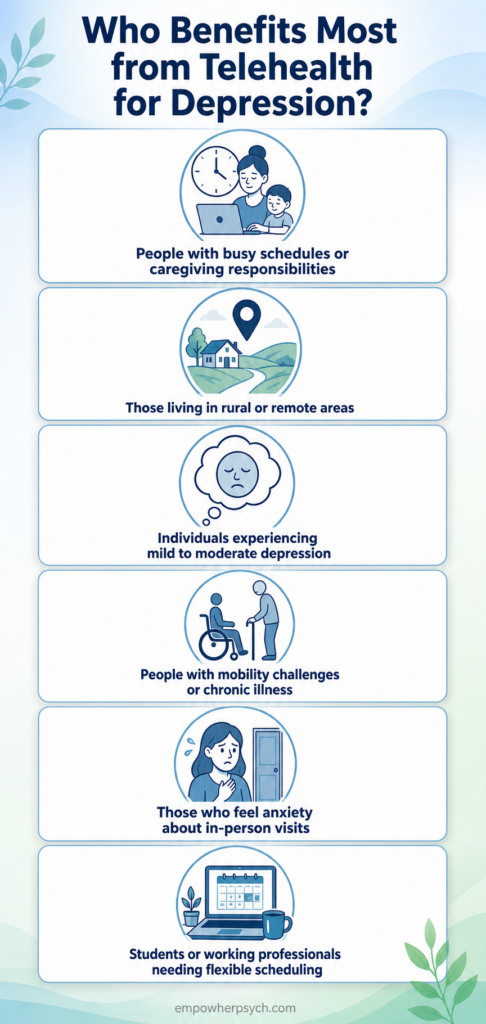
Who Benefits Most from Telehealth for Depression?
While telehealth is accessible to many people, certain groups often find it especially helpful.
Individuals who may benefit include:
- People with busy schedules or caregiving responsibilities
- Those living in rural or remote areas
- Individuals experiencing mild to moderate depression
- People with mobility challenges or chronic illness
- Those who feel anxiety about in-person visits
- Students or working professionals needing flexible scheduling
Telehealth can also be helpful for individuals who have already started therapy in person but need more flexible ongoing support.
However, it is important to note that severe depression or crisis situations may require in-person care or emergency services, depending on clinical assessment.
Limitations and Considerations of Virtual Mental Health Care
While telehealth for depression has many advantages, it is not without limitations.
Some considerations include:
- Limited access to in-person physical evaluation when needed
- Technology barriers such as poor internet connection
- Lack of private space at home for sessions
- Reduced ability to respond to emergencies in real time
- Not ideal for all severe psychiatric conditions
Additionally, some individuals may simply prefer face-to-face interaction for building trust and connection.
Mental health providers often evaluate whether telehealth is appropriate on a case-by-case basis, ensuring patients receive the safest and most effective level of care.
How to Prepare for a Telehealth Depression Appointment
Being prepared can help make virtual sessions more productive, focused, and comfortable, allowing you to get the most out of your time with your provider.
- Choose a quiet, private space: Find a location where you can speak openly without interruptions or the fear of being overheard. Privacy helps you feel more comfortable discussing sensitive thoughts and emotions.
- Test your internet connection and device: Before your appointment, check that your phone, tablet, or computer is working properly and that your internet connection is stable to avoid disruptions during the session.
- Write down symptoms or concerns in advance: Jotting down what you’ve been experiencing—such as mood changes, energy levels, or triggers—can help you clearly communicate your thoughts, especially if it feels hard to recall everything in the moment.
- Keep a list of medications (if any): Having an updated list of medications, including dosages and frequency, helps your provider better understand your current treatment and make informed recommendations.
- Be ready to discuss mood changes, sleep, and daily functioning: These areas give your provider important insight into how depression is affecting your daily life, including work, relationships, and overall well-being.
- Have water and tissues nearby for comfort: Emotional conversations can bring up strong feelings. Having simple comforts within reach can help you feel more supported and at ease during the session.
It can also help to treat the session like an in-person appointment by minimizing distractions and setting aside uninterrupted time. Turning off notifications, letting others in your home know you need privacy, and staying fully present can make the experience more meaningful and effective.
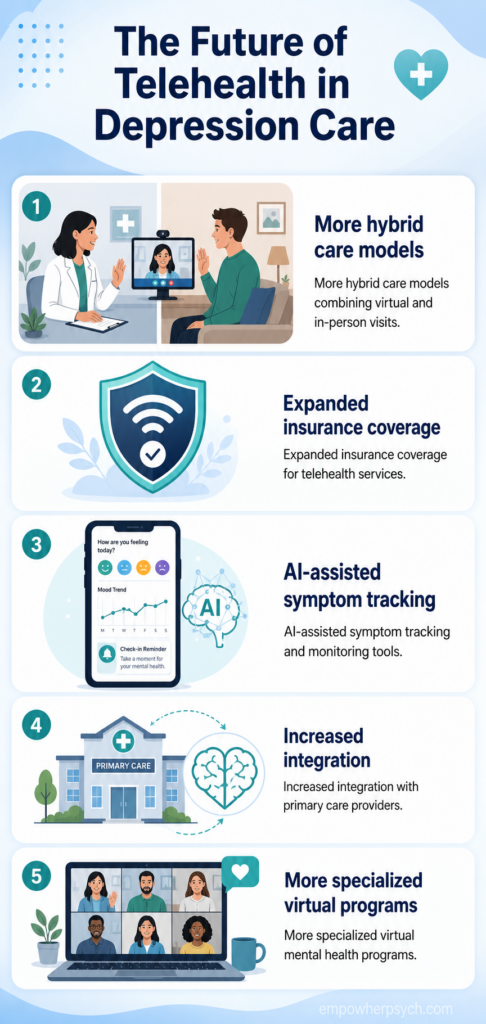
The Future of Telehealth in Depression Care
The growth of telehealth for depression is not slowing down. In fact, it is becoming a core part of modern mental health systems.
Future trends include:
- More hybrid care models combining virtual and in-person visits
- Expanded insurance coverage for telehealth services
- AI-assisted symptom tracking and monitoring tools
- Increased integration with primary care providers
- More specialized virtual mental health programs
As technology improves and access expands, telehealth is expected to play an even larger role in early intervention and long-term mental health support.
The goal is not to replace traditional care but to enhance it—making treatment more flexible, responsive, and accessible for more people.
A More Accessible Path to Healing Through Virtual Care
Telehealth for depression is reshaping how people access mental health support by removing barriers that once made treatment difficult or delayed. From flexible scheduling and private home-based sessions to improved access to licensed professionals, virtual care is helping more individuals begin and continue treatment in a way that fits their lives. While it may not replace every form of in-person care, it has become a powerful option for many people seeking relief, understanding, and stability.
If you or someone you know is struggling with depression, exploring virtual care can be an important first step toward healing. EmpowHer Psychiatry and Wellness offers compassionate, patient-centered psychiatric support designed to meet women where they are—emotionally and physically. With a holistic and supportive approach, they help individuals navigate depression through personalized care that prioritizes comfort, connection, and long-term well-being. Reaching out today can be the beginning of feeling heard, supported, and understood.
