
Stress has a way of quietly weaving itself into every part of your day—your thoughts, your body, your sleep, and even your relationships. When life feels overwhelming, the idea of “fixing” your stress can feel like just another task on an already overflowing list. The truth is, managing stress doesn’t require a complete life overhaul. Often, it’s the small, consistent habits—the simple stress reducing activities—that make the biggest difference in how you feel day to day.
This article explores realistic, science-informed ways to reduce stress, even when your schedule feels packed. You’ll learn how stress shows up in subtle ways, why quick fixes often fall short, and how to build a set of practical tools you can actually stick with. And if stress feels bigger than what daily habits can manage, we’ll also touch on how professional support can help you move forward with clarity and balance.
When “Just Relax” Isn’t Helpful
If you’ve ever been told to “just relax,” you already know how unhelpful that advice can feel. Stress isn’t simply a switch you can turn off. It’s a full-body response—your brain signaling that something needs attention, your nervous system staying on high alert, your body holding tension even when you try to rest.
For many people, stress becomes a constant background noise. You may still function—go to work, take care of responsibilities, show up for others—but internally, you feel stretched thin. This is often what chronic stress looks like: not a dramatic breakdown, but a slow, steady drain.
Recognizing this matters. Because if your stress feels persistent, it’s not a personal failure—it’s a signal that your current coping tools may need support or adjustment.
Why Small Activities Work Better Than Big Changes
It’s tempting to think you need a major reset—a vacation, a new routine, a complete lifestyle change—to feel better. But in reality, consistency beats intensity when it comes to stress management.
Simple stress reducing activities work because they:
- Fit into your existing routine
- Don’t require extra energy you don’t have
- Help regulate your nervous system in real time
- Build resilience gradually, not all at once
Instead of aiming for perfection, the goal is to create small moments of relief throughout your day. These moments add up—and over time, they can shift how your body and mind respond to stress.
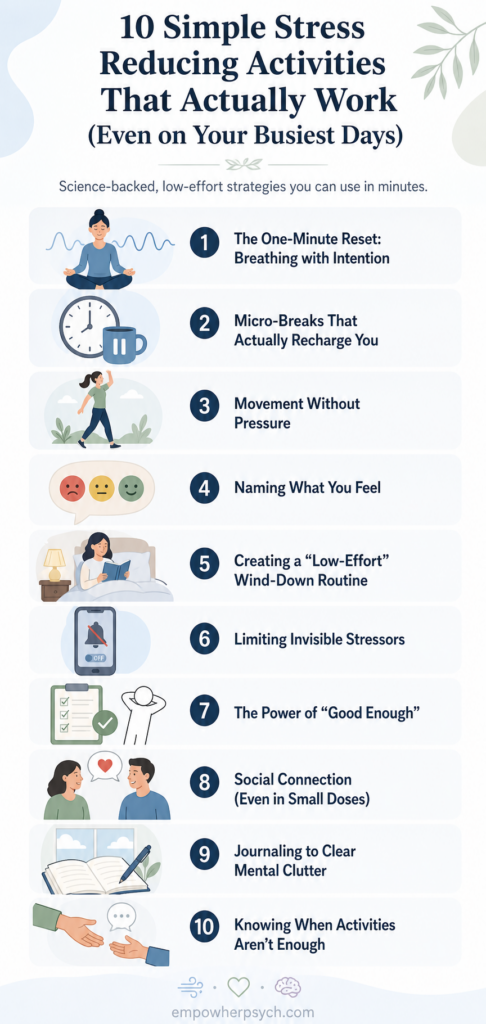
10 Simple Stress Reducing Activities That Actually Work (Even on Your Busiest Days)
Even on your busiest days, small, intentional habits can make a meaningful difference. These simple stress reducing activities are practical, effective, and designed to fit seamlessly into your daily routine.
1. The One-Minute Reset: Breathing with Intention
When stress spikes, your breathing often becomes shallow and rapid without you noticing. This signals your body to stay in “fight or flight” mode.
A simple reset:
- Inhale slowly through your nose for 4 seconds
- Hold for 2–3 seconds
- Exhale slowly through your mouth for 6 seconds
- Repeat for one minute
This technique helps activate your parasympathetic nervous system—the part responsible for calming your body. It’s one of the most accessible stress reducing activities because you can do it anywhere: at your desk, in traffic, or before a meeting.
2. Micro-Breaks That Actually Recharge You
Not all breaks are created equal. Scrolling on your phone might feel like a break, but it often keeps your brain overstimulated.
Instead, try intentional micro-breaks:
- Step outside for fresh air
- Stretch your neck and shoulders
- Close your eyes for 60 seconds
- Drink water slowly and mindfully
Even 2–3 minutes of a true pause can interrupt the stress cycle and give your mind space to reset.
3. Movement Without Pressure
Exercise is often recommended for stress, but the idea of a full workout can feel overwhelming when you’re already exhausted.
The key is to remove the pressure.
Effective, low-effort movement options:
- A 10-minute walk
- Light stretching before bed
- Standing up and moving every hour
- Gentle yoga or mobility exercises
Movement helps release built-up tension and reduces stress hormones like cortisol. It doesn’t have to be intense to be effective.
4. Naming What You Feel
Stress can feel like a blur—just “too much.” But putting words to your experience can reduce its intensity.
Try this simple practice:
- Pause and ask: What exactly am I feeling right now?
- Be specific: overwhelmed, anxious, irritated, mentally drained
- Acknowledge it without judgment
This is sometimes called “labeling emotions,” and research shows it can help calm the brain’s stress response. It creates a small but powerful shift—from reacting to understanding.
5. Creating a “Low-Effort” Wind-Down Routine
After a long day, your mind doesn’t automatically switch off. Without a transition, stress can carry into your evening and disrupt your sleep.
A simple wind-down routine might include:
- Dimming the lights
- Listening to calming music
- Taking a warm shower
- Writing down lingering thoughts
The goal isn’t perfection—it’s signaling to your body that it’s safe to slow down.
6. Limiting Invisible Stressors
Some stress doesn’t come from obvious sources. It builds quietly through daily habits.
Common invisible stressors include:
- Constant notifications
- Overcommitting your schedule
- Skipping meals
- Poor sleep habits
Reducing stress isn’t always about adding new activities—it’s also about removing what’s draining you.
Ask yourself: What’s one small thing I can reduce today?
7. The Power of “Good Enough”
Perfectionism often fuels stress. When everything feels urgent or important, your mind rarely gets a break.
Practicing “good enough” can be one of the most effective stress reducing activities:
- Completing a task without overthinking
- Letting go of unnecessary details
- Accepting progress instead of perfection
This doesn’t mean lowering your standards—it means recognizing where your energy is best spent.
8. Social Connection (Even in Small Doses)
Stress can make you withdraw, but connection is one of the strongest protective factors for mental well-being.
This doesn’t have to be a long conversation. It can be:
- Sending a quick message to a friend
- Sharing a laugh with a coworker
- Talking to someone you trust
Feeling seen and supported—even briefly—can reduce stress in meaningful ways.
9. Journaling to Clear Mental Clutter
When your thoughts feel overwhelming, writing them down can help create clarity.
Try a simple approach:
- Write freely for 5 minutes
- Don’t worry about structure or grammar
- Focus on what’s on your mind, not what sounds “right”
Journaling helps externalize your thoughts, making them easier to process instead of carrying them internally all day.
10. Knowing When Activities Aren’t Enough
While stress reducing activities can be powerful, they aren’t always sufficient—especially when stress is chronic or deeply rooted.
You might notice:
- Ongoing sleep difficulties
- Persistent anxiety or irritability
- Physical symptoms like headaches or fatigue
- Feeling stuck despite trying different strategies
These are signs that your stress may need more than self-guided tools.
This isn’t a failure—it’s an important awareness.
When Professional Support Becomes Part of the Solution
Managing stress doesn’t have to be something you figure out alone. In many cases, professional support provides structure, insight, and personalized strategies that go beyond general advice.
Working with a mental health professional can help you:
- Identify underlying stress patterns: Recognize recurring triggers, behaviors, and thought cycles that may be keeping you stuck in stress.
- Develop coping strategies tailored to your life: Learn practical tools that fit your schedule, personality, and specific challenges.
- Process experiences that contribute to ongoing stress: Safely explore past or present situations that may still be affecting your well-being.
- Build long-term emotional resilience: Strengthen your ability to adapt, recover, and stay grounded during difficult moments.
- Improve emotional awareness: Better understand your feelings so you can respond thoughtfully rather than react impulsively.
- Regulate your nervous system: Learn techniques that help your body shift out of constant “fight or flight” mode.
- Set healthy boundaries: Gain clarity and confidence in protecting your time, energy, and mental space.
- Challenge unhelpful thought patterns: Reframe negative or overwhelming thoughts into more balanced, realistic perspectives.
- Enhance communication skills: Express your needs and feelings more effectively in personal and professional relationships.
- Create sustainable routines: Build daily habits that support consistency, balance, and overall mental wellness.
- Address physical symptoms of stress: Understand and manage how stress shows up in your body, such as tension, fatigue, or sleep issues.
- Receive objective support and accountability: Work with someone who can guide you without judgment while helping you stay on track.
- Explore treatment options when needed: Learn about additional supports, including therapy approaches or medication, if appropriate for your situation.
It’s not about replacing your efforts—it’s about strengthening them.
Start Small, Stay Consistent, and Stay Curious
Stress management isn’t about doing everything at once. It’s about finding what works for you and allowing that to evolve over time.
You don’t need a perfect routine. You need a realistic one.
Start with one or two stress reducing activities that feel manageable. Practice them consistently. Notice what helps and what doesn’t. Adjust as needed.
Over time, these small steps can create meaningful change—not by removing stress completely, but by helping you respond to it with more balance and control.
Ready to Feel More Like Yourself Again?
If stress has been weighing on you more than usual, even small steps can make a difference. The simple stress reducing activities shared here are a starting point—tools you can use to create moments of calm, clarity, and control in your daily life. But if you find that stress continues to feel overwhelming, persistent, or difficult to manage on your own, it may be time to explore additional support.
EmpowHer Psychiatry and Wellness offers a space where your experiences are understood and your needs are taken seriously. With personalized care, compassionate guidance, and evidence-based approaches, you can move beyond just managing stress—and begin building a life that feels more balanced, steady, and truly your own.
