

For many women, work stress is often treated as a normal part of life. Tight deadlines, demanding schedules, workplace expectations, family responsibilities, caregiving duties, and personal commitments can create a constant cycle of pressure. While occasional stress is a natural response to challenges, ongoing work stress can quietly accumulate over time, affecting emotional well-being, physical health, relationships, and overall quality of life. What begins as feeling overwhelmed after a busy week can gradually evolve into chronic exhaustion, anxiety, irritability, sleep disturbances, and difficulty finding joy in everyday experiences.
Why Work Stress Impacts More Than Your Job
Many people think work stress stays at work. In reality, the effects often extend far beyond office walls or virtual meetings. When stress becomes chronic, the body remains in a heightened state of alertness, making it difficult to fully relax and recover.
Over time, work stress can affect:
- Mood and emotional regulation
- Sleep quality and energy levels
- Concentration and decision-making abilities
- Relationships with family and friends
- Physical health and immune function
- Self-confidence and motivation
- Overall life satisfaction
Women often face unique challenges that can intensify work stress. Balancing professional responsibilities alongside caregiving roles, household management, parenting, or supporting loved ones may create a significant mental and emotional load. The result is often a feeling of constantly being “on” without adequate opportunities to recharge.
The Slow Build-Up of Work Stress
Unlike sudden crises, work stress often develops gradually. The signs may be subtle at first, making them easy to overlook.
You might notice:
- Feeling tired even after a full night’s sleep
- Increased frustration over minor issues
- Difficulty concentrating during tasks
- Frequently thinking about work outside working hours
- Reduced enthusiasm for hobbies and activities
- Feeling emotionally drained by the end of the day
Because these symptoms often emerge slowly, many women adapt to them and consider them normal. Unfortunately, untreated work stress can continue building until it begins affecting multiple areas of life.
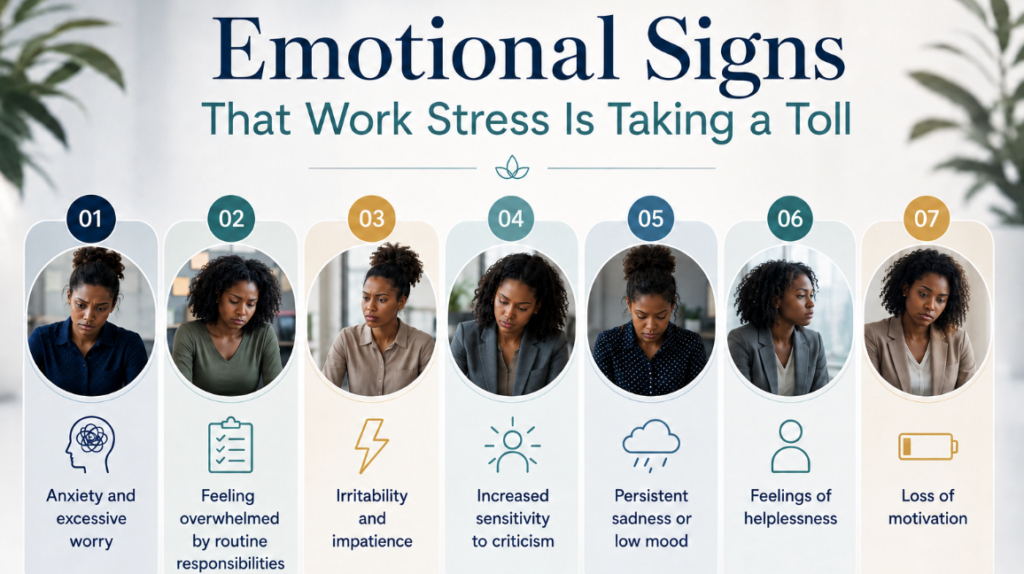
Emotional Signs That Work Stress Is Taking a Toll
The emotional impact of work stress can be significant. Constant pressure may leave you feeling mentally exhausted, emotionally reactive, or disconnected from yourself and others.
Common emotional signs include:
- Anxiety and excessive worry
- Feeling overwhelmed by routine responsibilities
- Irritability and impatience
- Increased sensitivity to criticism
- Persistent sadness or low mood
- Feelings of helplessness
- Loss of motivation
Women experiencing chronic work stress may also struggle with self-doubt. High expectations, perfectionism, or fear of making mistakes can create a cycle where stress fuels negative self-talk, which then increases stress even further.
How Work Stress Affects Physical Health
The connection between mental and physical health is powerful. When work stress becomes chronic, the body often responds with physical symptoms.
Some common physical effects include:
- Frequent headaches
- Muscle tension, particularly in the neck and shoulders
- Digestive discomfort
- Fatigue and low energy
- Changes in appetite
- Sleep difficulties
- Increased susceptibility to illness
Stress hormones are designed to help the body respond to short-term challenges. However, when work stress becomes a daily experience, prolonged activation of the stress response can contribute to ongoing health concerns and decreased overall well-being.
The Hidden Impact on Relationships
One of the most overlooked consequences of work stress is its effect on personal relationships.
After a stressful day, it may feel difficult to engage emotionally with loved ones. You may have less patience, reduced energy for meaningful conversations, or limited capacity to participate in social activities.
Work stress can contribute to:
- Increased conflict with partners
- Reduced emotional availability
- Less quality time with family
- Social withdrawal
- Feelings of isolation
- Difficulty maintaining friendships
Even when relationships remain strong, chronic work stress can make it harder to be fully present and connected with the people who matter most.
Why Women Often Carry an Invisible Mental Load
Many women manage responsibilities that are not always visible to others. Beyond professional obligations, there may be planning, organizing, caregiving, scheduling appointments, remembering family needs, and managing household responsibilities.
This invisible mental load can intensify work stress because the mind rarely gets a chance to rest.
Examples include:
- Coordinating family schedules
- Managing childcare arrangements
- Caring for aging parents
- Handling household logistics
- Supporting family members emotionally
- Planning meals and daily routines
When these responsibilities combine with workplace demands, women may experience a level of stress that extends well beyond their job descriptions.
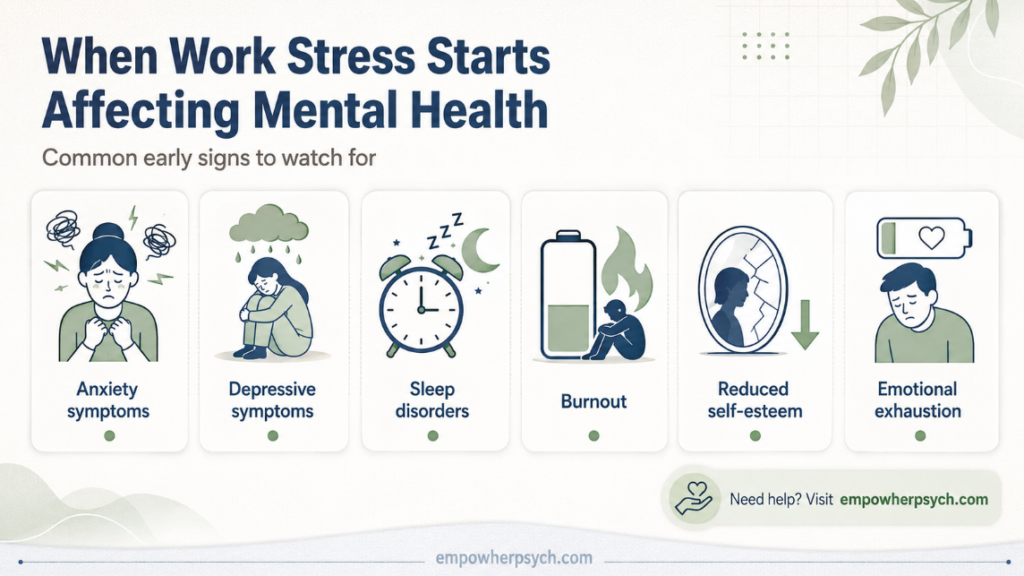
When Work Stress Starts Affecting Mental Health
Persistent work stress can increase vulnerability to various mental health challenges. While stress itself is not a mental health disorder, chronic exposure to stress may contribute to emotional difficulties that require attention and support.
Potential concerns include:
- Anxiety symptoms
- Depressive symptoms
- Sleep disorders
- Burnout
- Reduced self-esteem
- Emotional exhaustion
Recognizing these warning signs early is important. The sooner work stress is addressed, the easier it may be to prevent more significant emotional and physical consequences.
The Difference Between Stress and Burnout
Although they are related, work stress and burnout are not the same.
Work stress often involves feeling overwhelmed, pressured, and emotionally taxed. Burnout typically develops after prolonged exposure to unmanaged stress and can involve deeper levels of exhaustion and disengagement.
Signs of burnout may include:
- Feeling emotionally numb
- Loss of interest in work
- Cynicism or detachment
- Chronic fatigue
- Reduced productivity
- Feeling hopeless about change
Burnout does not happen overnight. It is often the result of long-term work stress that has gone unaddressed for an extended period.
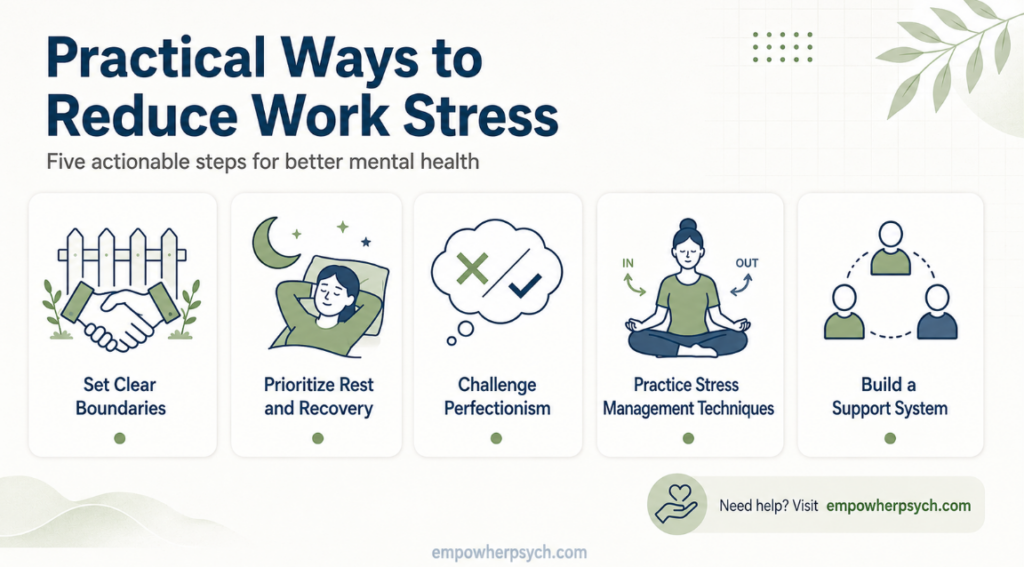
Practical Ways to Reduce Work Stress
While it may not be possible to eliminate every source of work stress, there are effective strategies that can help reduce its impact.
1. Set Clear Boundaries
Boundaries help protect your time, energy, and emotional well-being.
Consider:
- Limiting after-hours work communication
- Taking regular breaks during the day
- Creating a dedicated workspace if working remotely
- Establishing clear start and end times for work
Healthy boundaries create opportunities for recovery and help prevent work stress from dominating every aspect of life.
2. Prioritize Rest and Recovery
Many women view rest as a luxury rather than a necessity. In reality, recovery is essential for maintaining emotional and physical health.
- Maintain Consistent Sleep Routines: Aim to go to bed and wake up at the same time each day, including weekends. Create a calming bedtime routine by limiting screen time, avoiding caffeine late in the day, and engaging in relaxing activities such as reading or gentle stretching. Consistent sleep habits help regulate your body’s internal clock, improve energy levels, and make it easier to cope with work stress.
- Take Short Breaks Throughout the Day: Give yourself permission to step away from work periodically, even if only for a few minutes. Stand up, stretch, take a short walk, practice deep breathing, or simply rest your eyes from screens. These brief pauses can help reduce mental fatigue, improve focus, and prevent work stress from building throughout the day.
- Schedule Downtime Without Guilt: Set aside dedicated time for rest just as you would schedule meetings or appointments. Whether it is an hour in the evening, a quiet weekend morning, or time spent relaxing after work, intentional downtime allows your mind and body to recover. Remember that rest is a productive part of maintaining your overall well-being, not something that needs to be earned.
- Engage in Activities That Bring Enjoyment: Make time for hobbies and activities that help you feel refreshed and fulfilled. This may include reading, gardening, crafting, exercising, listening to music, spending time in nature, or connecting with loved ones. Participating in enjoyable activities provides a healthy mental break from work stress and helps restore emotional balance.
Recovery helps the body and mind reset, making it easier to manage daily challenges.
3. Challenge Perfectionism
Perfectionism can significantly contribute to work stress.
Ask yourself:
- Are my expectations realistic?
- Am I holding myself to impossible standards?
- Would I expect the same level of perfection from someone else?
Learning to embrace progress rather than perfection can reduce unnecessary pressure and improve overall well-being.
4. Practice Stress Management Techniques
Simple stress-management strategies can make a meaningful difference when practiced consistently.
Deep Breathing Exercises:
Set aside a few minutes each day to focus on your breathing. Slowly inhale through your nose for four counts, hold for four counts, and exhale through your mouth for six counts. Repeat this cycle several times whenever you feel overwhelmed. Deep breathing helps calm the nervous system and can reduce the immediate effects of work stress.
Mindfulness Practices:
Practice being fully present in the moment without judging your thoughts or feelings. You can do this by focusing on your breathing, observing your surroundings, or paying close attention to everyday activities such as eating or walking. Mindfulness helps reduce mental clutter and prevents work stress from consuming your attention throughout the day.
Gentle Movement or Stretching:
Incorporate light physical activity into your routine, especially during busy workdays. Stretch your neck, shoulders, back, and legs, take a short walk, or try gentle yoga exercises. Movement can release physical tension caused by work stress while improving circulation and boosting energy levels.
Journaling:
Spend a few minutes each day writing down your thoughts, emotions, and experiences. You can reflect on challenges, identify stress triggers, express gratitude, or explore possible solutions to concerns. Journaling provides an outlet for emotional processing and can help you gain perspective on sources of work stress.
Spending Time Outdoors:
Make an effort to spend time outside whenever possible. Take a walk during your lunch break, sit in a park, enjoy your morning coffee outdoors, or simply get fresh air after work. Being in nature can promote relaxation, improve mood, and provide a healthy mental break from work stress.
Relaxation Techniques:
Explore activities specifically designed to help your body and mind unwind. This may include progressive muscle relaxation, guided imagery, meditation, listening to calming music, or taking a warm bath. Regular relaxation practices can lower stress levels and help you recover more effectively from daily pressures.
These tools may not eliminate work stress entirely, but they can improve resilience and emotional regulation.
5. Build a Support System
No one is meant to carry every burden alone.
Support may come from:
- Trusted friends
- Family members
- Colleagues
- Support groups
- Mental health professionals
Having a safe space to share concerns can reduce feelings of isolation and provide valuable perspective during stressful periods.
Recognizing When You Need Additional Support
Sometimes work stress reaches a point where self-care strategies are no longer enough. Seeking support is not a sign of weakness—it is a proactive step toward protecting your well-being.
Consider reaching out for professional help if you experience:
- Persistent anxiety
- Ongoing sadness or hopelessness
- Difficulty functioning at work or home
- Severe sleep disruption
- Emotional exhaustion that does not improve
- Increasing difficulty coping with daily responsibilities
Professional support can help identify underlying factors contributing to work stress while providing practical tools to improve emotional health and resilience.
Small Changes Can Create Meaningful Relief
One of the most empowering truths about work stress is that meaningful improvement often begins with small, consistent changes. You do not need to overhaul your entire life overnight. Setting one boundary, prioritizing one self-care habit, or asking for support can create momentum toward better mental and emotional well-being.
When work stress has been present for a long time, it is easy to assume that exhaustion and overwhelm are simply part of life. However, stress should not become your permanent state of being. Every woman deserves opportunities to rest, recover, and experience balance without feeling consumed by constant pressure.
Don’t Let Work Stress Quietly Take Over Your Life
Work stress may start as occasional pressure, but when left unchecked, it can gradually influence your mood, health, relationships, confidence, and overall sense of well-being. Recognizing the signs early and taking intentional steps toward stress management can help prevent long-term emotional and physical consequences. Prioritizing your mental health is not selfish—it is one of the most important investments you can make in yourself.
If work stress is affecting your daily life, emotional health, or ability to feel like yourself, professional support can help you regain balance and clarity. EmpowHer Psychiatry and Wellness provides compassionate psychiatric care for women across the lifespan, offering guidance, evidence-based treatment, talk therapy, medication management, and telehealth services to support your journey toward lasting wellness and resilience.
