
Have you ever found yourself questioning whether someone truly cares about you, even when they consistently show love, support, and commitment? Perhaps you replay conversations in your head, search for hidden meanings in text messages, or worry that a relationship will suddenly fall apart without warning. If these thoughts sound familiar, you may be experiencing relationship anxiety. While occasional doubts are a normal part of relationships, persistent worry can create emotional distress and make it difficult to feel secure, even with trustworthy people.
For many women, relationship anxiety goes beyond simple uncertainty. It can affect self-esteem, communication, emotional well-being, and overall relationship satisfaction. The constant need for reassurance and the tendency to anticipate rejection can leave you feeling exhausted and disconnected from the people who matter most. Understanding why relationship anxiety develops and learning how to manage it can help you build healthier, more fulfilling relationships while gaining greater confidence in yourself.
What Is Relationship Anxiety?
Relationship anxiety refers to ongoing fears, worries, and uncertainties about romantic relationships, emotional connections, or the feelings of a partner. It often involves excessive concern about being rejected, abandoned, misunderstood, or not being loved enough.
Unlike temporary relationship concerns that arise during difficult situations, relationship anxiety tends to persist even when there is little evidence that something is wrong. A caring partner may provide reassurance, but the relief is often short-lived because the underlying anxiety remains.
Women experiencing relationship anxiety may find themselves constantly seeking certainty in situations where certainty simply does not exist. Relationships naturally involve vulnerability, trust, and emotional risk, which can feel overwhelming when anxiety is present.
Common Signs of Relationship Anxiety
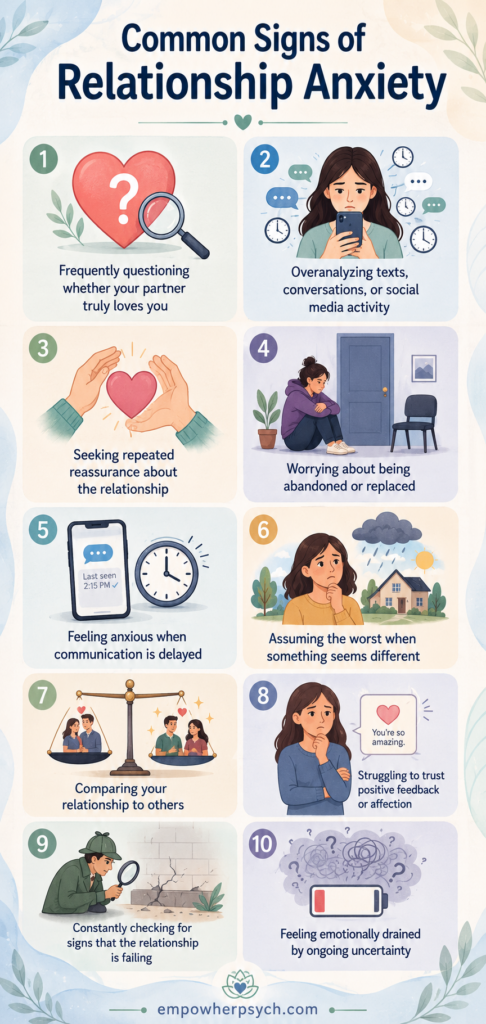
Relationship anxiety can show up in many different ways. Some signs are obvious, while others can be subtle and easy to overlook.
Common signs include:
- Frequently questioning whether your partner truly loves you
- Overanalyzing texts, conversations, or social media activity
- Seeking repeated reassurance about the relationship
- Worrying about being abandoned or replaced
- Feeling anxious when communication is delayed
- Assuming the worst when something seems different
- Comparing your relationship to others
- Struggling to trust positive feedback or affection
- Constantly checking for signs that the relationship is failing
- Feeling emotionally drained by ongoing uncertainty
Not everyone experiences relationship anxiety in the same way. Some women become clingy and seek constant reassurance, while others withdraw emotionally to protect themselves from potential hurt.
Why Do Women Experience Relationship Anxiety?
Relationship anxiety rarely appears without a reason. It often develops through a combination of personal experiences, emotional patterns, and life circumstances.
Understanding the roots of relationship anxiety can help reduce self-blame and provide a clearer path toward healing.
1. Past Relationship Experiences
Previous relationships can significantly influence how you approach new ones. If you have experienced betrayal, dishonesty, abandonment, or emotional neglect, your mind may become hypervigilant in future relationships.
Even when your current partner behaves differently, old wounds can create a heightened sense of danger. Your brain may continue scanning for threats because it wants to prevent you from getting hurt again.
2. Childhood Experiences and Attachment Patterns
Many experts believe that early relationships with caregivers play an important role in shaping adult relationships.
If love, attention, or emotional support felt inconsistent growing up, you may develop fears about whether people will remain available and supportive. These experiences can contribute to relationship anxiety later in life.
Women who learned that affection could be withdrawn unexpectedly may find themselves constantly monitoring relationships for signs of rejection.
3. Low Self-Esteem
Relationship anxiety often thrives when self-worth is fragile.
If you struggle to see your own value, it can be difficult to believe that someone genuinely loves and appreciates you. Instead of accepting affection, you may question it.
Thoughts such as “What if they realize I’m not good enough?” or “What if they leave when they really get to know me?” can fuel relationship anxiety and create ongoing emotional distress.
4. Fear of Vulnerability
Healthy relationships require emotional openness. However, vulnerability can feel frightening when you’ve experienced emotional pain in the past.
Opening your heart to someone means accepting that there are no guarantees. For women dealing with relationship anxiety, this uncertainty can feel uncomfortable and even threatening.
As a result, the mind may attempt to create safety through overthinking, excessive analysis, or constant reassurance-seeking.
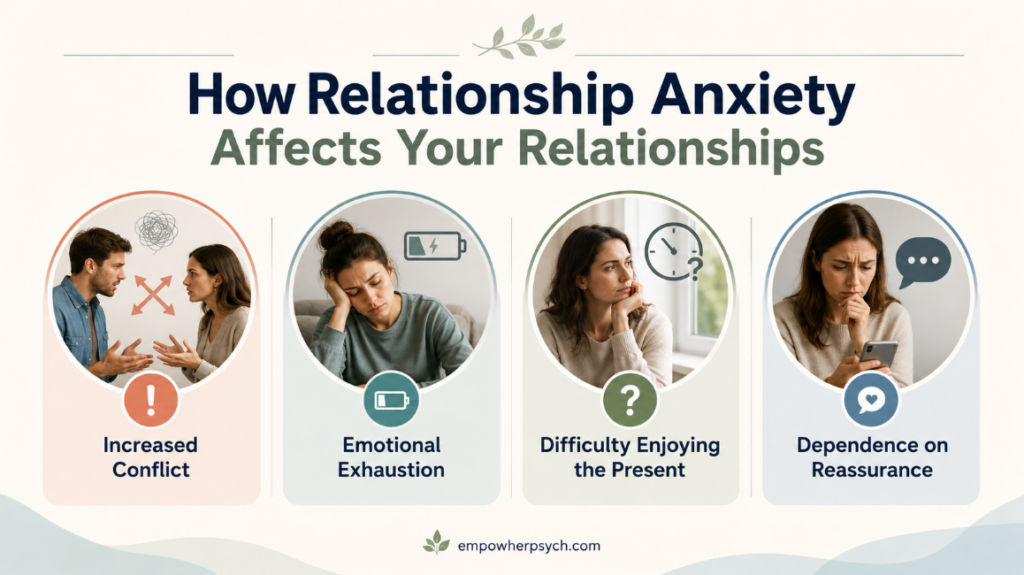
How Relationship Anxiety Affects Your Relationships
One of the most challenging aspects of relationship anxiety is that it can create the very problems you fear.
The constant cycle of worry and doubt can place stress on both partners and interfere with healthy communication.
1. Increased Conflict
When relationship anxiety is present, neutral situations may be interpreted negatively.
A delayed response to a message might feel like rejection. A busy work schedule may seem like emotional distance. These interpretations can lead to misunderstandings and unnecessary arguments.
2. Emotional Exhaustion
Constantly monitoring a relationship for signs of trouble requires significant emotional energy.
Women experiencing relationship anxiety often describe feeling mentally exhausted from overthinking, worrying, and trying to predict future outcomes.
3. Difficulty Enjoying the Present
Relationship anxiety tends to focus attention on what might go wrong rather than what is going well.
Instead of enjoying meaningful moments with a partner, you may find yourself worrying about future problems that have not actually occurred.
4. Dependence on Reassurance
Although reassurance can provide temporary comfort, relying on it too heavily can strengthen relationship anxiety over time.
The more reassurance you seek, the more your brain learns to depend on external validation instead of developing internal confidence and trust.
Questions Women With Relationship Anxiety Often Ask Themselves
Relationship anxiety often creates repetitive thought patterns that can feel difficult to escape.
Some common questions include:
- Do they really love me?
- What if they’re losing interest?
- Am I too much for them?
- Why haven’t they responded yet?
- What if they meet someone better?
- Are they secretly unhappy?
- Am I reading too much into this?
- What if this relationship ends suddenly?
These questions can feel urgent and important. However, relationship anxiety often magnifies uncertainty and encourages worst-case-scenario thinking.
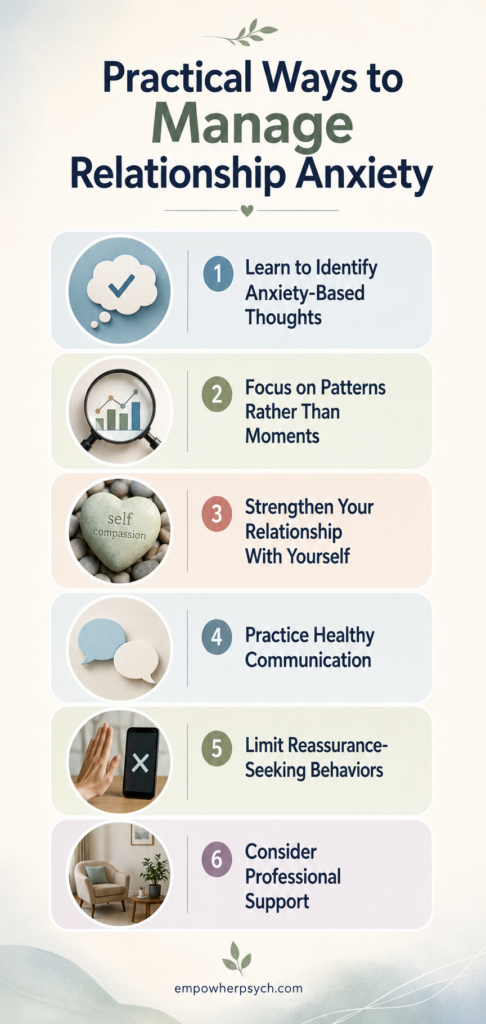
Practical Ways to Manage Relationship Anxiety
The good news is that relationship anxiety can be managed. Developing healthier thought patterns and emotional coping skills can help reduce distress and improve relationship satisfaction.
1. Learn to Identify Anxiety-Based Thoughts
The first step is recognizing when anxiety is driving your thoughts.
Ask yourself:
- Do I have evidence for this belief?
- Am I assuming the worst?
- Could there be another explanation?
- Is this fear based on the present or on past experiences?
Creating space between facts and fears can help reduce the intensity of relationship anxiety.
2. Focus on Patterns Rather Than Moments
A single text message, conversation, or interaction rarely defines an entire relationship.
Instead of focusing on isolated moments, look at the overall pattern of behavior.
Consider questions such as:
- Are they generally supportive?
- Do they communicate consistently?
- Do their actions match their words?
- Do they show care and respect over time?
Patterns often provide a more accurate picture than individual events.
3. Strengthen Your Relationship With Yourself
One of the most effective ways to reduce relationship anxiety is to build confidence independent of your relationship status.
Consider investing time in:
- Personal goals
- Friendships
- Hobbies and interests
- Physical wellness
- Emotional self-care
- Professional growth
The stronger your sense of self becomes, the less likely relationship anxiety is to control your thoughts and emotions.
4. Practice Healthy Communication
Many women assume they must handle relationship anxiety alone, but healthy communication can make a meaningful difference.
Instead of accusing or blaming, try expressing your feelings openly and respectfully.
For example:
- “I’ve been feeling a little insecure lately.”
- “I sometimes struggle with overthinking.”
- “Can we talk about something that’s been on my mind?”
Honest conversations often create connection and understanding rather than conflict.
5. Limit Reassurance-Seeking Behaviors
While reassurance can feel comforting, constantly seeking it can keep relationship anxiety alive.
Challenge yourself to sit with uncertainty before asking for validation. Over time, this practice can help build emotional resilience and reduce dependence on external reassurance.
6. Consider Professional Support
Relationship anxiety can sometimes become overwhelming and interfere with daily life, emotional well-being, or relationship health.
Working with a mental health professional can help you identify underlying causes, develop healthier coping strategies, and build stronger emotional confidence. Talk therapy can provide a safe space to explore fears, attachment patterns, and past experiences that may be contributing to relationship anxiety.
You Deserve Relationships That Feel Safe and Secure
Relationship anxiety can make even healthy relationships feel uncertain. It can convince you that love is fragile, trust is risky, and reassurance is never enough. Yet many of these fears are rooted in old experiences, negative thought patterns, or emotional wounds rather than present-day reality. Learning to recognize relationship anxiety is the first step toward breaking free from its grip and creating healthier emotional connections.
At EmpowHer Psychiatry and Wellness, we understand that relationship anxiety can affect every aspect of a woman’s emotional well-being. Whether you’re struggling with constant overthinking, fear of abandonment, or difficulty trusting people who genuinely care about you, compassionate support can help. Taking the step to seek guidance can empower you to build stronger relationships, develop greater self-confidence, and experience the peace of mind you deserve.
