

Perfectionism is often praised in our culture. Women who stay organized, work tirelessly, achieve impressive goals, and appear to have everything under control are frequently admired for their dedication. From the outside, perfectionism can look like ambition, discipline, or a strong work ethic. But beneath the polished surface, perfectionism is often fueled by something much deeper—fear. Fear of failure, fear of judgment, fear of disappointing others, or fear of not being enough. While striving for excellence can be healthy, it creates unrealistic expectations that can leave women feeling exhausted, anxious, and trapped in a cycle of never-ending self-criticism.
What Is Perfectionism?
Perfectionism is more than simply wanting to do well. It involves setting excessively high standards and tying your self-worth to your ability to meet those standards. Unlike healthy ambition, it often leaves little room for mistakes, learning, or self-compassion.
Women struggling with it may experience:
- Constant fear of making mistakes
- Excessive self-criticism
- Difficulty accepting compliments
- Procrastination due to fear of failure
- Chronic stress and anxiety
- Feeling that nothing they do is ever good enough
- Difficulty celebrating achievements
- People-pleasing behaviors
It creates an internal pressure that can feel impossible to escape. Even significant accomplishments may bring only temporary relief before new expectations take their place.
The Difference Between Ambition and Perfectionism
Many women confuse perfectionism with ambition because both involve goals and achievement. However, the motivation behind them is very different.
Healthy ambition is driven by growth, curiosity, and purpose. It allows room for mistakes and recognizes that progress matters more than perfection.
Perfectionism, on the other hand, is often driven by fear. It tells you that your value depends on flawless performance and that mistakes are evidence of inadequacy.
Healthy ambition says:
- “I want to improve.”
- “Mistakes help me learn.”
- “My worth is not defined by outcomes.”
- “Progress is meaningful.”
Perfectionism says:
- “I must never fail.”
- “Mistakes are unacceptable.”
- “I need everyone’s approval.”
- “Nothing I do is ever enough.”
Understanding this distinction is important because it often disguises itself as productivity while quietly damaging emotional well-being.
Why Women Are Particularly Vulnerable to Perfectionism
Women frequently face pressures from multiple directions. Society often sends conflicting messages about who women should be and how they should perform.
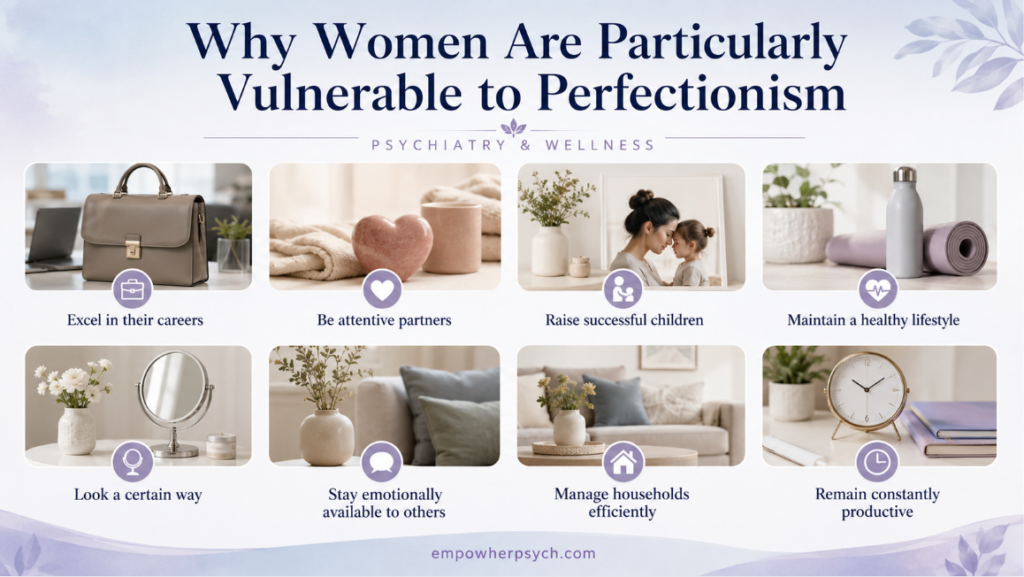
Many women feel expected to:
- Excel in their careers
- Be attentive partners
- Raise successful children
- Maintain a healthy lifestyle
- Look a certain way
- Stay emotionally available to others
- Manage households efficiently
- Remain constantly productive
These expectations can create a perfect environment for perfectionism to thrive.
Social media can make the problem even worse. Carefully curated images and highlight reels can create unrealistic comparisons. Women may begin to believe that everyone else is succeeding effortlessly while they alone are struggling.
The result is often increased perfectionism, self-doubt, and emotional exhaustion.
The Hidden Fear Behind Perfectionism
At its core, it is often a protective strategy. It develops as an attempt to avoid uncomfortable emotions and experiences.
Some common fears that drive perfectionism include:
1. Fear of Failure
Many women believe failure will lead to rejection, embarrassment, or loss of respect. It becomes an attempt to eliminate all possibility of failure.
2. Fear of Judgment
It can stem from concerns about what others think. The desire to appear competent, successful, and capable may become overwhelming.
3. Fear of Rejection
Some women learn early in life that approval feels conditional. They may begin to associate achievement with acceptance, leading perfectionism to become a survival strategy.
4. Fear of Not Being Enough
Perhaps the most powerful driver of perfectionism is the belief that personal worth depends on performance. This belief can create a relentless need to prove oneself over and over again.
How Perfectionism Affects Mental Health
Although it may appear productive, it often comes with significant emotional costs.
Research and clinical experience consistently show connections between perfectionism and mental health challenges.
It can contribute to:
- Anxiety
- Depression
- Chronic stress
- Burnout
- Low self-esteem
- Obsessive thinking
- Sleep disturbances
- Relationship difficulties
Many women find themselves caught in a cycle where perfectionism temporarily reduces anxiety but ultimately creates more of it.
For example:
- A task creates anxiety.
- It demands flawless performance.
- Temporary relief occurs after completion.
- New expectations emerge.
- Anxiety returns.
The cycle repeats, often becoming increasingly exhausting over time.
Signs Your Perfectionism May Be Controlling Your Life
Because it is often socially rewarded, it can be difficult to recognize when it becomes unhealthy.
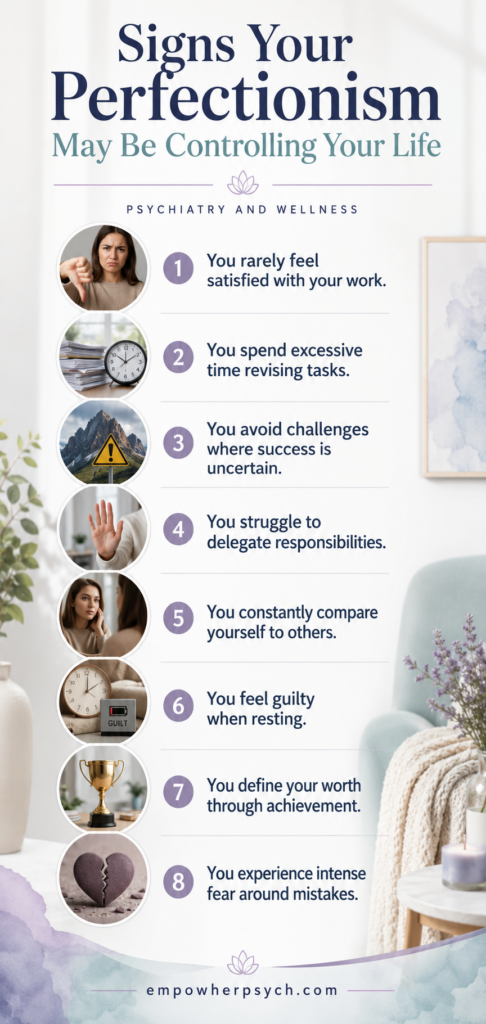
You may be struggling with it if:
- You rarely feel satisfied with your work.
- You spend excessive time revising tasks.
- You avoid challenges where success is uncertain.
- You struggle to delegate responsibilities.
- You constantly compare yourself to others.
- You feel guilty when resting.
- You define your worth through achievement.
- You experience intense fear around mistakes.
Recognizing these patterns is often the first step toward change.
Solutions: How to Break Free From Perfectionism
Overcoming it does not mean lowering your standards or abandoning your goals. Instead, it involves developing a healthier relationship with achievement, mistakes, and self-worth.
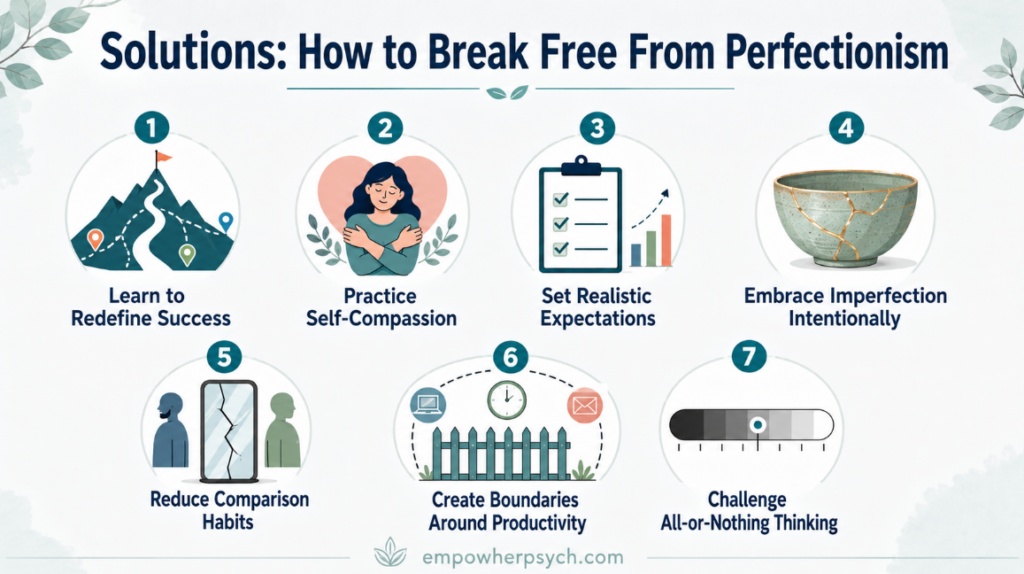
1. Learn to Redefine Success
Success does not require flawlessness. Consider measuring success by effort, growth, learning, and resilience rather than perfect outcomes.
Ask yourself:
- What did I learn?
- How did I grow?
- Did I show up authentically?
- Did I make meaningful progress?
These questions help shift attention away from perfectionism and toward personal development.
2. Practice Self-Compassion
Many women speak to themselves in ways they would never speak to a friend.
When perfectionism triggers self-criticism:
- Notice your inner dialogue.
- Challenge harsh assumptions.
- Replace judgment with understanding.
- Remind yourself that mistakes are part of being human.
Self-compassion is not weakness. It is a powerful tool for emotional resilience.
3. Set Realistic Expectations
It thrives on impossible standards.
Consider:
- Prioritizing what truly matters.
- Distinguishing between excellence and perfection.
- Accepting that good enough is often sufficient.
- Breaking large goals into manageable steps.
Realistic expectations create space for sustainable success.
4. Embrace Imperfection Intentionally
One effective way to challenge it is through small acts of imperfection.
Examples include:
- Sending an email without rereading it multiple times.
- Sharing ideas before they feel perfect.
- Allowing others to help.
- Leaving minor mistakes uncorrected.
These experiences help teach the brain that imperfection is survivable.
5. Reduce Comparison Habits
Comparison fuels perfectionism by creating unrealistic benchmarks.
To reduce comparison:
- Limit exposure to accounts that trigger self-criticism.
- Focus on your own values and goals.
- Celebrate personal progress.
- Remember that social media rarely reflects reality.
Your journey is unique and deserves to be measured on its own terms.
6. Create Boundaries Around Productivity
Many women with perfectionism feel guilty when they are not accomplishing something.
Healthy boundaries include:
- Scheduling regular rest
- Taking breaks without justification
- Protecting personal time
- Recognizing that rest supports productivity
You do not have to earn your right to rest.
7. Challenge All-or-Nothing Thinking
Perfectionism often sees situations in extremes.
Examples include:
- Perfect or failure
- Success or disaster
- Strong or weak
- Productive or lazy
Real life exists in the middle. Learning to embrace nuance can significantly reduce perfectionism and emotional distress.
Perfectionism Quotes
Sometimes a simple quote can provide powerful perspective on personal growth.
- “Progress, not perfection.”
- “Done is better than perfect.”
- “Perfection is not attainable, but excellence is achievable.”
- “Mistakes are proof that you are trying.”
- “Growth begins where perfectionism ends.”
- “Your worth is not measured by your productivity.”
- “Imperfection is part of being human.”
- “You can be a work in progress and still be worthy.”
The Importance of Mental Health Professionals
While self-help strategies can be valuable, persistent perfectionism may benefit from professional support. Mental health professionals can help uncover the underlying beliefs and fears that fuel perfectionism.
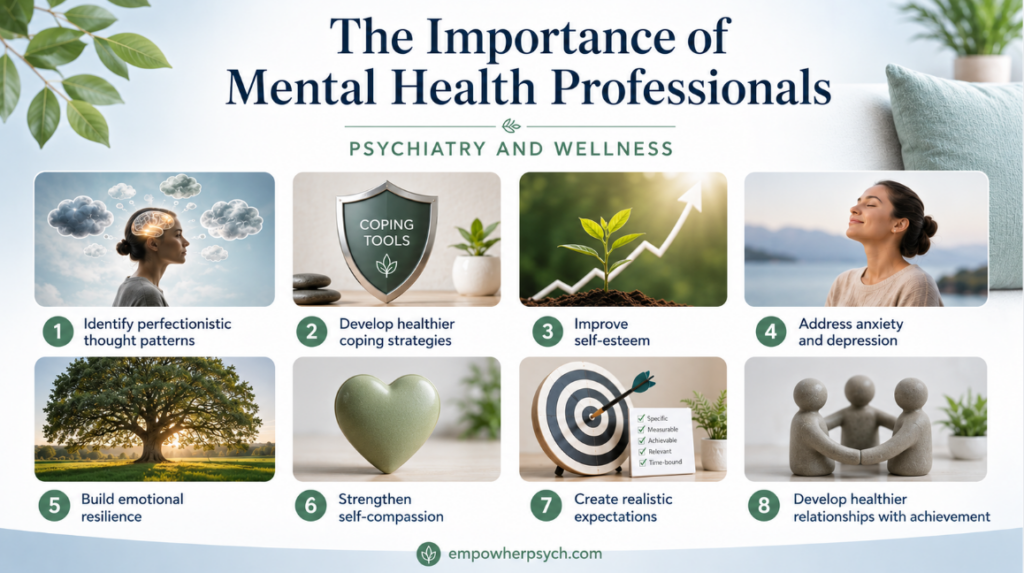
Working with a qualified professional can help women:
- Identify perfectionistic thought patterns
- Develop healthier coping strategies
- Improve self-esteem
- Address anxiety and depression
- Build emotional resilience
- Strengthen self-compassion
- Create realistic expectations
- Develop healthier relationships with achievement
Therapy can provide a safe and supportive environment to explore the roots of perfectionism and learn practical tools for lasting change.
Mental health professionals understand that perfectionism is rarely about simply wanting things to be perfect. More often, it reflects deeper emotional struggles that deserve understanding, compassion, and evidence-based support.
Stop Letting Fear Disguise Itself as Success
Perfectionism often promises confidence, achievement, and security. Yet for many women, it delivers stress, self-doubt, exhaustion, and a constant feeling of falling short. When perfectionism becomes the standard, even extraordinary accomplishments can feel inadequate. Recognizing that perfectionism is often fear wearing a productive mask can be a powerful step toward greater freedom, self-acceptance, and emotional well-being.
You deserve support that recognizes the unique challenges women face throughout every stage of life. EmpowHer Psychiatry and Wellness is committed to helping women build resilience, develop healthier coping strategies, and cultivate lasting mental wellness. If anxiety, stress, or self-criticism are affecting your quality of life, reaching out for professional guidance can be an empowering step toward healing and growth.
