

A woman walks past a crowded parking lot and suddenly feels her heart racing, palms sweating, and breath shortening — familiar sensations from a car accident years ago that she thought she’d moved past. These unexpected reactions signal a trauma trigger, subtle cues from the nervous system flagging potential danger long after the original threat has passed. With trauma awareness growing and women increasingly seeking tools to manage mental health, recognizing trauma triggers early prevents emotional overwhelm and supports proactive healing. Readers will walk away able to identify trauma trigger warning signs, understand their physiological roots, and take practical steps toward safety and professional support.
What Exactly Is a Trauma Trigger?
A trauma trigger is any sensory, emotional, or environmental cue that reactivates the body’s stored response to past traumatic events. It bypasses conscious thought, instantly shifting someone into fight, flight, freeze, or fawn mode as if the danger is happening now.
These reactions stem from the brain’s survival wiring. The amygdala — the fear center — scans for threats faster than rational processing, explaining why a trauma trigger can hijack composure without warning. Women often experience this differently, with societal pressure to “stay composed” adding layers of internal conflict.
Early Warning Signs of a Trauma Trigger
Recognizing a trauma trigger begins with noticing subtle body signals before full activation. These physical precursors often appear first, giving a brief window for intervention.
Common early trauma trigger signs include:
- Sudden tension in shoulders, jaw, or chest
- Rapid heartbeat or shallow breathing
- Stomach clenching, nausea, or dizziness
- Heightened senses — sounds seem louder, lights brighter
One woman described her trauma trigger as “a quiet alarm” — tingling skin before memories flooded in. Tuning into these sensations builds awareness, turning automatic reactions into manageable moments.
Emotional and Cognitive Clues
Beyond the body, trauma trigger hints show in fleeting thoughts or mood shifts. Irritability spikes, focus fragments, or vague dread emerges without clear cause.
Watch for:
- Intrusive images or flashbacks starting as mental “static”
- Urge to escape current situations
- Emotional numbness or dissociation creeping in
These cues signal the nervous system ramping up. Early detection allows grounding before overwhelm takes hold.
Common Trauma Triggers Women Encounter

Trauma triggers vary widely but follow patterns tied to original experiences. Sensory reminders — smells, sounds, textures — activate most reliably.
Frequent trauma triggers for women include:
- Loud voices or raised tones echoing verbal abuse
- Physical touch or proximity recalling assault
- Crowded spaces mimicking past confinement
- Dates, locations, or even weather linked to events
- Certain perfumes or cleaning smells tied to childhood homes
- Medical environments or procedures evoking past violations
- Alcohol scents or bar settings connected to unsafe nights
- Specific music, songs, or background noise from traumatic moments
- Clothing textures reminiscent of abuse incidents
Relationships often surface trauma triggers too. Authority figures, arguments, or intimacy can evoke old powerlessness. Awareness of personal patterns empowers prediction and preparation.
Subtle Environmental Cues
Everyday settings hide trauma triggers. A certain perfume, hospital antiseptic smell, or driving in rain might launch reactions without obvious connection.
Mapping these requires reflection. Journaling after episodes reveals threads — “That coffee shop song always tightens my chest.” Knowledge transforms randomness into predictability.
The Physiology Behind Trauma Triggers
Trauma triggers engage the autonomic nervous system directly. Past events imprint on the body, storing incomplete survival responses in implicit memory.
When activated, cortisol surges, heart rate elevates, and prefrontal cortex — responsible for reason — goes offline. This explains why logic fails during a trauma trigger: survival trumps analysis.
Women’s hormonal cycles can amplify sensitivity, making trauma triggers more intense premenstrually. Understanding this biology reduces self-blame, framing reactions as protective, not personal failings.
Why Early Recognition Changes Everything

Spotting a trauma trigger early interrupts escalation. Seconds of awareness allow choices — deep breathing, safe distancing, or self-soothing — preserving control.
Without recognition, trauma triggers compound. Repeated activation reinforces hypervigilance, eroding sleep, relationships, and resilience. Proactive identification breaks this cycle, fostering safety from within.
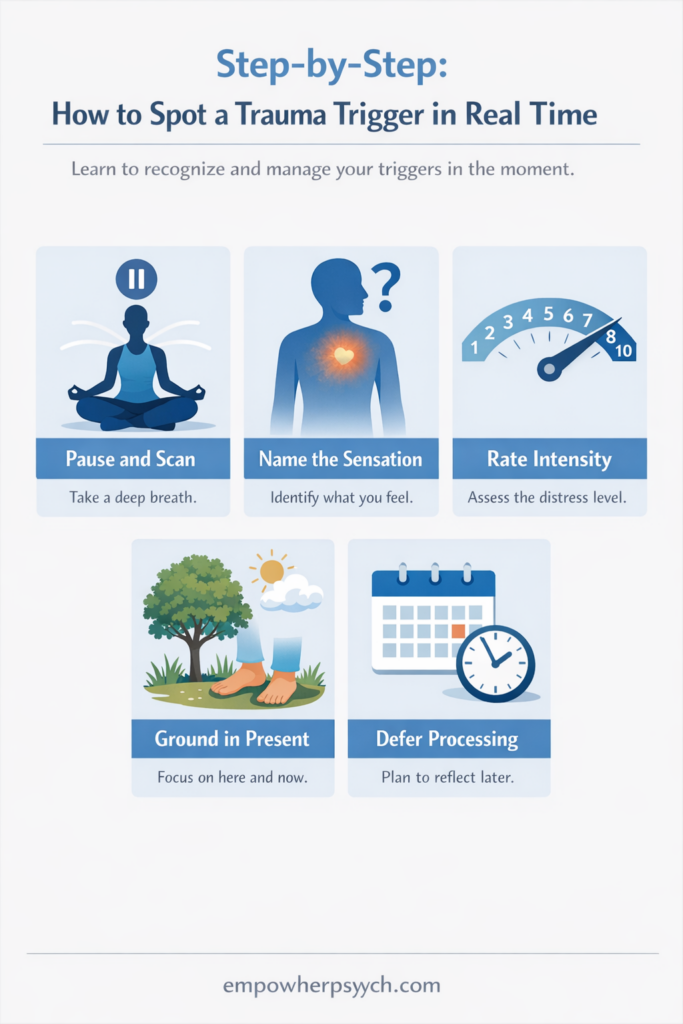
Step-by-Step: How to Spot a Trauma Trigger in Real Time
Building trauma trigger awareness follows a simple practice. Consistency turns observation into instinct.
- Pause and scan: At the first hint of tension — a clenched jaw, racing pulse, or vague unease — stop and mentally check your body from head to toe. Notice shallow breathing, tight shoulders, or tingling hands without judgment. This interrupts autopilot activation.
- Name the sensation: Verbalize exactly what you’re feeling: “My chest feels tight,” “My stomach is knotted,” or “My hands are shaking.” Externalizing the experience creates distance from overwhelm, signaling to your brain that you’re observing, not drowning.
- Rate intensity: Quickly assign a number on a 1-10 scale — “This is a 4” — to track escalation patterns over time. Low numbers (1-3) suggest early intervention works best; higher scores signal need for stronger grounding. Journaling these builds predictive power.
- Ground in present: Use the 5-4-3-2-1 technique: name five things you see, four you can touch, three you hear, two you smell, one you taste. This sensory anchor pulls focus to “now” versus trauma memory, short-circuiting the trauma trigger escalation.
- Defer processing: Jot a quick note — time, trigger guess, sensation — for later therapy discussion, then redirect to safety. Ask, “Where can I feel my feet on the ground?” This prioritizes stabilization over analysis during activation.
Practice during calm builds fluency for high-stakes moments. Women report this toolkit halves overwhelm frequency.
Body-Based Tools to Interrupt Trauma Triggers
Somatic practices excel at de-escalating trauma triggers. These bypass thinking, speaking directly to the nervous system.
Effective techniques:
- 4-7-8 breathing: Inhale four counts, hold seven, exhale eight — activates parasympathetic rest.
- Bilateral stimulation: Alternating taps on thighs mimics EMDR, discharging activation.
- Orienting: Slowly scan room, affirming “I’m safe here now.”
These tools regulate before emotions peak. Regular use rewires responses, reducing trauma trigger potency over time.
Journaling to Map Your Trauma Triggers
Tracking trauma triggers reveals patterns invisible in the moment. A dedicated log captures antecedents, sensations, and aftermaths.
Structure entries with:
- Date, time, location
- Trigger description and intensity
- Body sensations and emotions
- What helped (or didn’t)
Review weekly. Clusters emerge — “Weekends at family gatherings spike my trauma trigger responses.” Insight guides avoidance or preparation.
When Trauma Triggers Signal Deeper Work

Frequent or intense trauma triggers indicate unresolved trauma demanding professional attention. Self-tools manage symptoms; therapy heals roots.
Persistent trauma triggers disrupting:
- Work performance or relationships
- Sleep, eating, or daily routines
- Self-trust or safety feelings
These warrant evaluation. Skilled therapists unpack origins, preventing trauma trigger dominance.
The Role of Professional Support in Managing Trauma Triggers
Therapy transforms trauma trigger management. EMDR processes stored memories, reducing activation. Somatic Experiencing completes stalled survival responses.
Medication sometimes stabilizes, easing therapy engagement. Women’s health specialists consider hormonal influences on trauma trigger sensitivity.
Group therapy normalizes experiences, combating isolation. Professional guidance ensures safe, paced healing beyond symptom control.
Creating a Personal Trauma Trigger Safety Plan
A trauma trigger plan outlines responses in advance. Personalize based on identified cues and tools.
Components include:
- Signal detection: Three early body warnings
- Immediate actions: Top two grounding techniques
- Support contacts: Trusted person for debrief
- Aftercare: Gentle restoration like warm tea, rest
Laminating or phoning this plan ensures access during distress. Preparedness reduces trauma trigger impact significantly.
Long-Term Strategies to Reduce Trauma Trigger Frequency

Healing diminishes trauma trigger power. Lifestyle supports nervous system regulation.
Incorporate:
- Consistent sleep and nutrition
- Mindful movement like yoga
- Boundary-setting in triggering environments
- Ongoing therapy integration
Progress shows in faded intensity and quicker recovery. Trauma triggers evolve from threats to manageable echoes.
Conclusion
Trauma triggers activate old survival wiring through body signals, emotional shifts, and environmental cues, offering early recognition windows that prevent overwhelm when met with awareness and tools. Women learn to scan for tension, ground in the present, and map patterns, transforming reactive chaos into empowered response. Professional support addresses roots, ensuring lasting regulation beyond self-management.
EmpowHer Psychiatry and Wellness provides compassionate care for women navigating trauma triggers, offering talk therapy, medication management, and telehealth convenience tailored to life stages. Their experts craft personalized plans honoring each woman’s experience and pace. Begin with a consultation today — effective support turns awareness into freedom.
