

Some experiences don’t end when they are over. They linger in the body, in memory, in reactions you cannot always explain. A certain smell may trigger anxiety. A tone of voice may cause your heart to race. You may find yourself overthinking relationships, expecting abandonment, or feeling emotionally exhausted without knowing why. For many women, unresolved trauma quietly shapes daily life long after the original pain has passed.
This is why therapy for past trauma has become such an important part of mental health care. Healing is not about forgetting what happened. It is about reducing the emotional weight those experiences still carry. It is about understanding your reactions, rebuilding safety within yourself, and learning how to move forward without being controlled by what hurt you.
Among the many approaches available, talk therapy remains one of the most widely used and accessible forms of therapy for past trauma, especially for women who want a safe, supportive place to process what they have been carrying for years.
How Trauma Affects Women Differently
Trauma is not always dramatic or obvious. Sometimes it comes from a single painful event. Other times, it develops slowly through repeated emotional wounds, neglect, or chronic stress.
Women often experience trauma in ways that are deeply tied to relationships, safety, and identity. This can include:
Common sources of trauma for women:
- Caregiver burnout
- Emotional neglect during childhood
- Toxic or controlling relationships
- Domestic violence or abuse
- Sexual harassment or assault
- Medical trauma or difficult childbirth experiences
- Workplace discrimination or chronic stress
- Sudden loss or grief
- Betrayal by trusted individuals
Women are also more likely to internalize trauma responses. Instead of expressing anger outwardly, many turn it inward through self-criticism, anxiety in women, people-pleasing, or emotional withdrawal.
This is why therapy for past trauma often focuses not just on what happened, but on how it shaped:
- Self-worth
- Boundaries
- Emotional safety
- Relationship patterns
- Stress responses
- Confidence and voice
Talk therapy helps make these connections visible so healing can begin.
What Is Talk Therapy and Why Is It Effective for Trauma?
Healing begins when your story is heard without judgment. That is the foundation of talk therapy.
Talk therapy, sometimes called psychotherapy, is a structured conversation between you and a trained mental health professional. The goal is not simply to talk about painful memories, but to understand how they affect your present life and develop healthier ways to cope and respond.
As a form of therapy for past trauma, talk therapy focuses on three core healing processes:
1. Making Sense of What Happened
Trauma often leaves unanswered questions. Therapy helps organize confusing experiences into a narrative your brain can process.
2. Reducing Emotional Intensity
Talking through trauma in a safe environment helps reduce the emotional charge attached to painful memories.
3. Building Healthier Coping Tools
You learn skills that help you respond to triggers with awareness rather than survival reactions.
What makes talk therapy especially powerful is that healing often happens through the relationship itself. Being consistently heard, respected, and supported can help repair trust that trauma may have damaged.
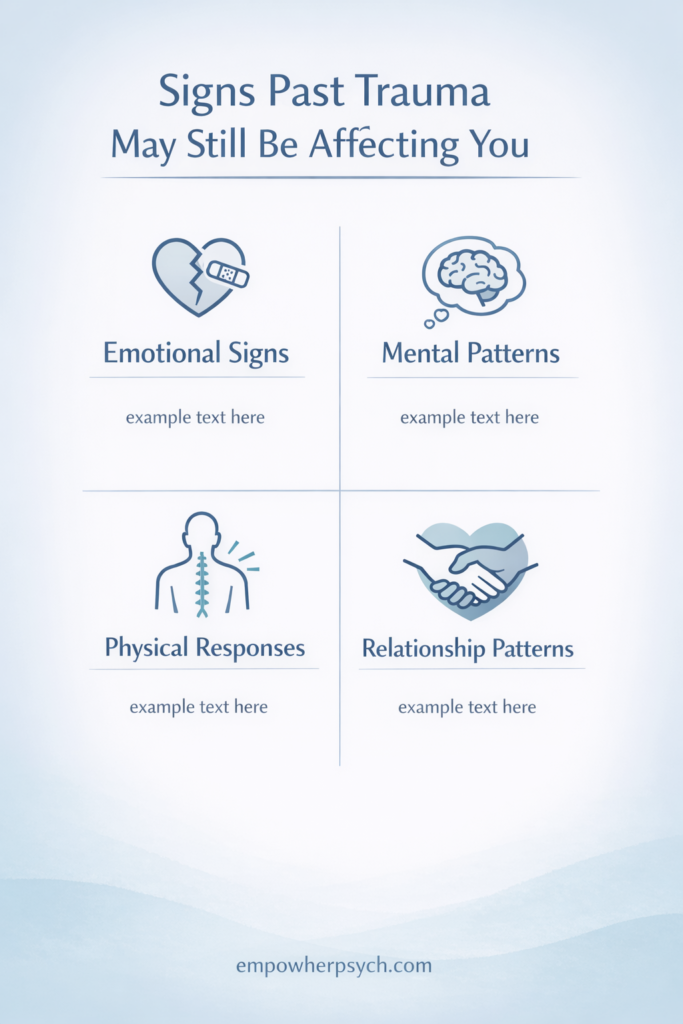
Signs Past Trauma May Still Be Affecting You
Trauma does not always appear as obvious distress. Sometimes it shows up as patterns you may have normalized.
Many women seek therapy for past trauma after noticing symptoms like:
Emotional signs:
- Persistent anxiety
- Emotional numbness
- Mood swings
- Feeling easily overwhelmed
- Chronic guilt or shame
- Difficulty trusting others
Mental patterns:
- Overthinking conversations
- Expecting rejection
- Self-blame
- Negative self-talk
- Difficulty making decisions
Physical responses:
- Trouble sleeping
- Muscle tension
- Fatigue
- Headaches
- Digestive issues
Relationship patterns:
- Fear of vulnerability
- People-pleasing
- Avoiding conflict at all costs
- Staying in unhealthy relationships
- Difficulty setting boundaries
Many people are surprised to learn these responses are not personality flaws. They are often trauma adaptations. Talk therapy helps you see the difference.
How Talk Therapy Helps You Process Trauma Safely
Healing trauma is not about reliving pain repeatedly. Effective therapy for past trauma focuses on safety first.
A good therapist does not push you to share everything immediately. Instead, they help you build emotional stability before going deeper.
The process often includes:
Creating emotional safety first
Before processing trauma, therapy may focus on:
- Grounding techniques
- Stress management tools
- Emotional regulation skills
- Identifying triggers
- Building trust
Gradual processing
Once stability increases, therapy may explore:
- Your story at your pace
- Meaning you attached to events
- False beliefs formed through trauma
- Emotional patterns that developed
Reframing beliefs
Trauma often teaches harmful lessons like:
- “I am not safe.”
- “I am not worthy.”
- “I must always be strong.”
- “My needs do not matter.”
Talk therapy helps challenge these beliefs and replace them with healthier perspectives.
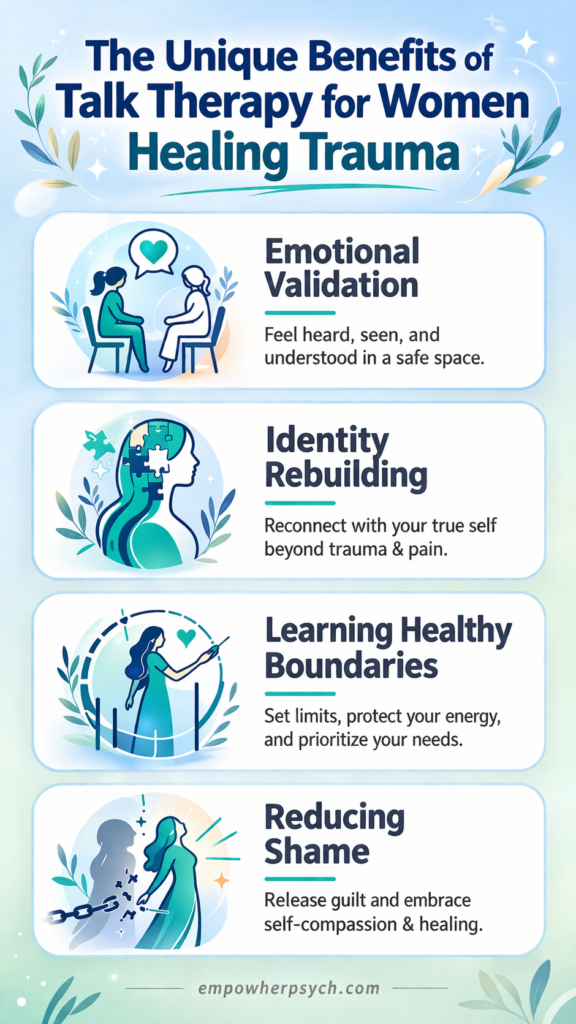
The Unique Benefits of Talk Therapy for Women Healing Trauma
Many women carry invisible emotional labor. They may be used to being the strong one, the caretaker, or the problem solver for others.
Talk therapy offers something many women rarely receive: a space where they do not have to perform strength.
Key benefits of therapy for past trauma through talk therapy include:
Emotional validation
- Feeling heard without being dismissed
- Understanding your reactions make sense
- Reducing self-judgment
Identity rebuilding
Trauma can make women forget who they were before survival mode.
Therapy helps reconnect with:
- Personal values
- Strengths
- Preferences
- Voice
- Boundaries
Learning healthy boundaries
Many trauma survivors struggle to say no. Therapy helps you learn:
- Boundaries are not rejection
- Protecting your peace is healthy
- You do not need to earn rest
- Your needs matter
Reducing shame
One of trauma’s deepest wounds is shame. Talking about experiences often reduces the isolation that keeps shame alive.
What Progress in Trauma Therapy Actually Looks Like
Healing rarely looks dramatic. Most progress is quiet and gradual.
Women engaged in therapy for past trauma often notice changes like:
Emotional changes:
- Feeling calmer in situations that once triggered anxiety
- Recovering faster after stress
- Less emotional reactivity
Mental shifts:
- Kinder self-talk
- More balanced thinking
- Less rumination
Behavioral changes:
- Setting small boundaries
- Speaking up more
- Prioritizing self-care
- Walking away from unhealthy dynamics
Relationship improvements:
- Choosing healthier connections
- Communicating needs more clearly
- Feeling less fear of abandonment
Healing is often measured not by forgetting trauma, but by how little control it has over your present life.
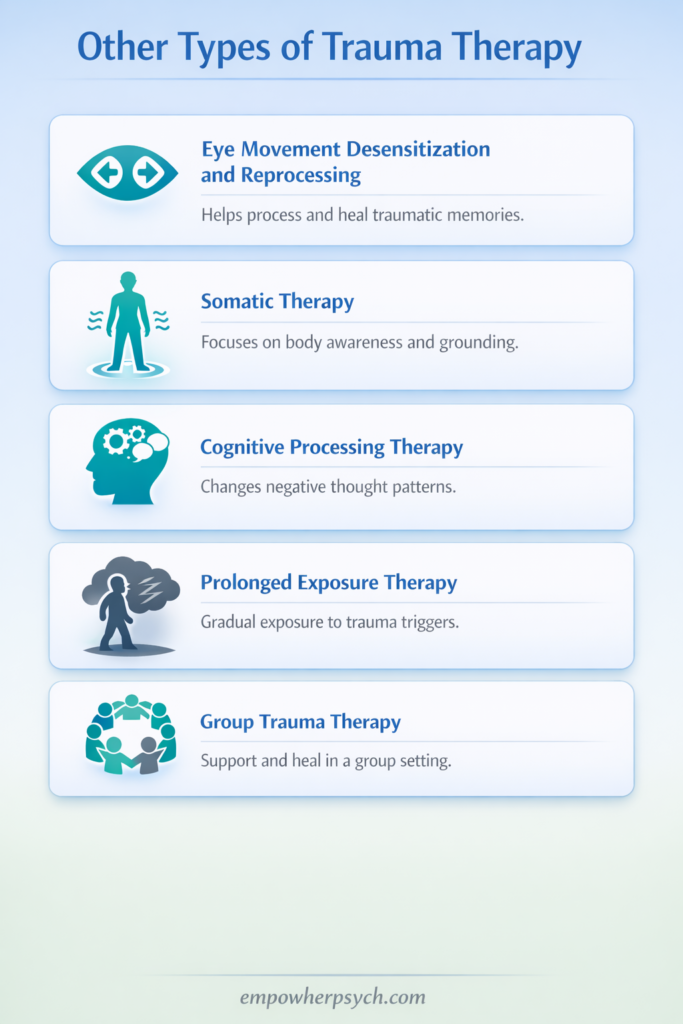
Other Types of Trauma Therapy
While this article focuses on talk therapy, it is helpful to understand that there are several forms of therapy for past trauma. Different people benefit from different approaches depending on their needs.
Some other trauma therapies include:
1. EMDR (Eye Movement Desensitization and Reprocessing)
- Uses guided eye movements
- Helps reprocess traumatic memories
- Often used for PTSD
2. Somatic Therapy
- Focuses on body sensations
- Helps release stored stress responses
- Useful when trauma feels physical
3. Cognitive Processing Therapy (CPT)
- Focuses on trauma-related beliefs
- Helps restructure harmful thinking patterns
4. Prolonged Exposure Therapy
- Gradual exposure to trauma memories
- Helps reduce fear responses
5. Group Trauma Therapy
- Healing through shared experiences
- Reduces isolation
Even with these options, talk therapy often remains the starting point because it builds understanding, emotional safety, and coping skills that support any healing path.
Why Some Women Delay Seeking Therapy for Past Trauma
Many women wait years before seeking help. Not because they do not need support, but because they have learned to minimize their pain.
Common reasons include:
- “Others had it worse.”
- “It happened a long time ago.”
- “I should be over it.”
- “I am strong enough to handle it.”
- Fear of being judged
- Fear of reopening old wounds
- Cultural expectations about resilience
The truth is, trauma does not expire based on time. If something still affects your peace, it is valid to seek therapy for past trauma.
Strength is not measured by how much pain you tolerate alone. Sometimes it is measured by your willingness to heal.
How to Know If You Are Ready to Start Talk Therapy
There is no perfect moment to begin healing. Readiness often looks like curiosity rather than certainty.
You might be ready for therapy for past trauma if:
- You are tired of repeating the same emotional patterns
- You want to understand yourself better
- You feel stuck despite trying to move forward
- You want healthier relationships
- You want to feel more emotionally stable
- You are ready to invest in your mental health
You do not need to have everything figured out. You only need willingness to begin.
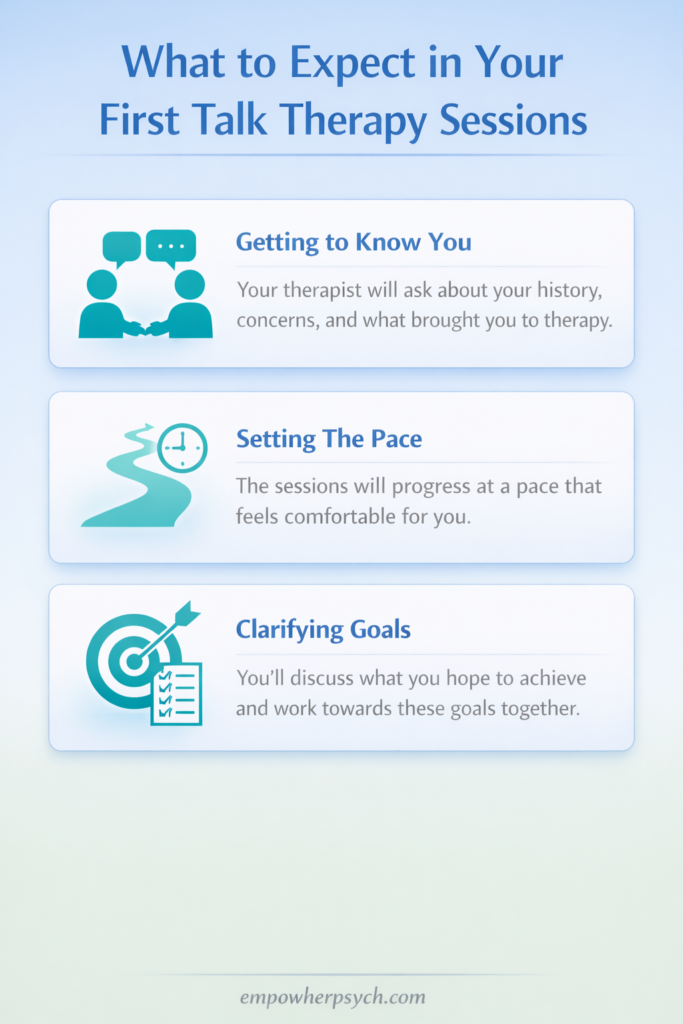
What to Expect in Your First Talk Therapy Sessions
First sessions often feel intimidating because of uncertainty. Knowing what to expect can reduce anxiety.
Early therapy sessions often focus on:
Getting to know you
Your therapist may ask about:
- Current concerns
- Personal history
- Stress levels
- Support systems
- Goals for therapy
Setting the pace
You are not expected to share your deepest trauma immediately.
Early work often focuses on:
- Building comfort
- Identifying priorities
- Developing coping tools
- Establishing trust
Clarifying goals
Your therapist may help you define goals such as:
- Reducing anxiety
- Improving confidence
- Processing specific experiences
- Improving relationships
Remember: therapy is collaborative. You are allowed to ask questions and express what feels helpful or uncomfortable.
How to Get the Most From Talk Therapy
Like any growth process, results often depend on engagement.
Ways to maximize therapy for past trauma include:
Be honest, even when uncomfortable
Progress comes from authenticity, not perfection.
Practice skills between sessions
Growth happens in real life, not just therapy rooms.
Be patient with yourself
Healing is not linear.
Track small progress
Celebrate:
- Speaking up once
- Setting one boundary
- Managing one trigger differently
- Showing yourself compassion
Give feedback
If something does not feel helpful, discussing it can improve the process.
Therapy works best when it feels like a partnership.
Healing Does Not Mean the Past Disappears
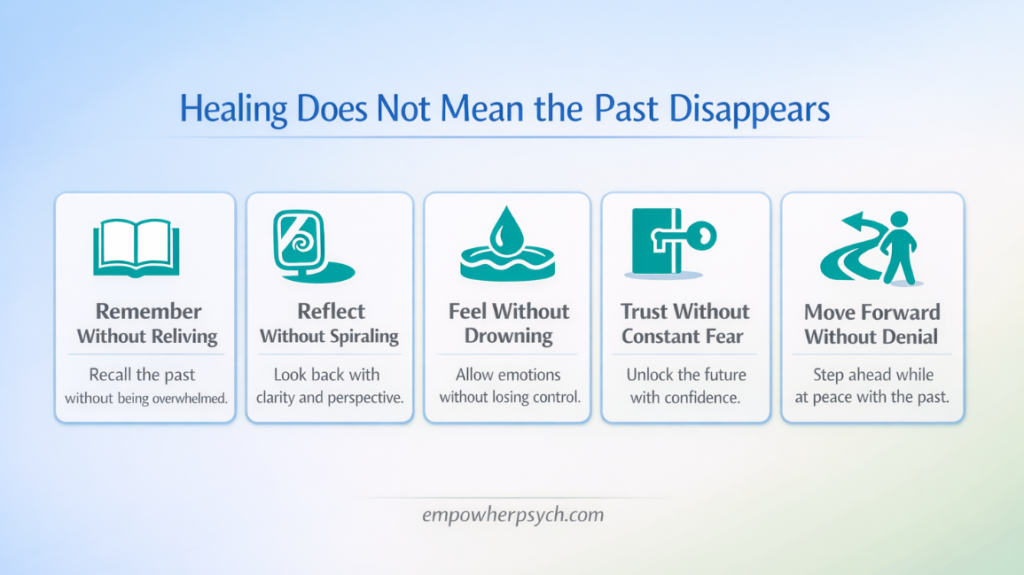
One of the biggest misconceptions about trauma healing is that it erases memories. It does not.
Effective therapy for past trauma helps you:
- Remember without reliving
- Reflect without spiraling
- Feel without drowning
- Trust without constant fear
- Move forward without denial
The goal is not to become who you were before trauma. It is to become someone stronger, wiser, and more supported because you chose to heal.
Healing Is Not About Becoming Someone New — It Is About Coming Back to Yourself
Healing from trauma is rarely about dramatic transformation. More often, it is about removing the weight that keeps you from feeling like yourself. Through talk therapy, many women discover they were never broken. They were adapting. They were surviving. And with the right support, they can finally move from survival into stability, clarity, and emotional freedom. Therapy for past trauma gives language to pain, structure to healing, and direction to growth. It helps women understand their triggers, rebuild confidence, strengthen boundaries, and create healthier relationships with themselves and others.
And if you have been carrying emotional pain longer than you should have to, this may be your reminder that support exists and healing is possible. If you are considering therapy for past trauma and want compassionate, professional guidance, EmpowHer Psychiatry and Wellness provides talk therapy designed to support women through healing, growth, and emotional recovery. Working with a mental health professional can help you better understand your experiences, develop coping strategies, and move forward with greater confidence and clarity.
