

When life feels overwhelming, it’s easy to feel lost in your thoughts, emotions, and responsibilities. Many women carry heavy loads—balancing work, family, and personal expectations—while struggling to process complex feelings like anxiety, guilt, or sadness. One powerful tool that can help navigate this internal landscape is journaling.
Journaling for mental health is more than just writing in a notebook. It’s a deliberate, reflective practice that helps you clarify thoughts, identify patterns, and gain insight into your emotional world. Over time, journaling can help women understand themselves better, process experiences, and build emotional resilience.
In this article, we’ll explore how journaling works, why it’s effective, and practical strategies for integrating it into daily life—whether you’re managing stress, grief, or the challenges of life transitions.
What Journaling for Mental Health Really Is
At its core, journaling for mental health is a structured form of self-reflection. Unlike casual diary entries, this practice is intentional: it focuses on exploring emotions, identifying triggers, and recording responses to experiences.
The benefits are supported by research in psychology and neuroscience: putting thoughts into words activates areas of the brain associated with reflection and emotional regulation. When women write about feelings, they are better able to:
- Process complex emotions without judgment
- Recognize patterns in thinking and behavior
- Reduce emotional intensity, making stress more manageable
Journaling doesn’t have to be complicated. Even five minutes a day can help you develop a stronger awareness of your emotions and cultivate a healthier relationship with yourself.
Why Journaling Helps Women Understand Themselves Better

Women often face unique pressures that influence mental health, from societal expectations to caregiving responsibilities and hormonal changes. Journaling provides a safe, private space to explore these influences without judgment.
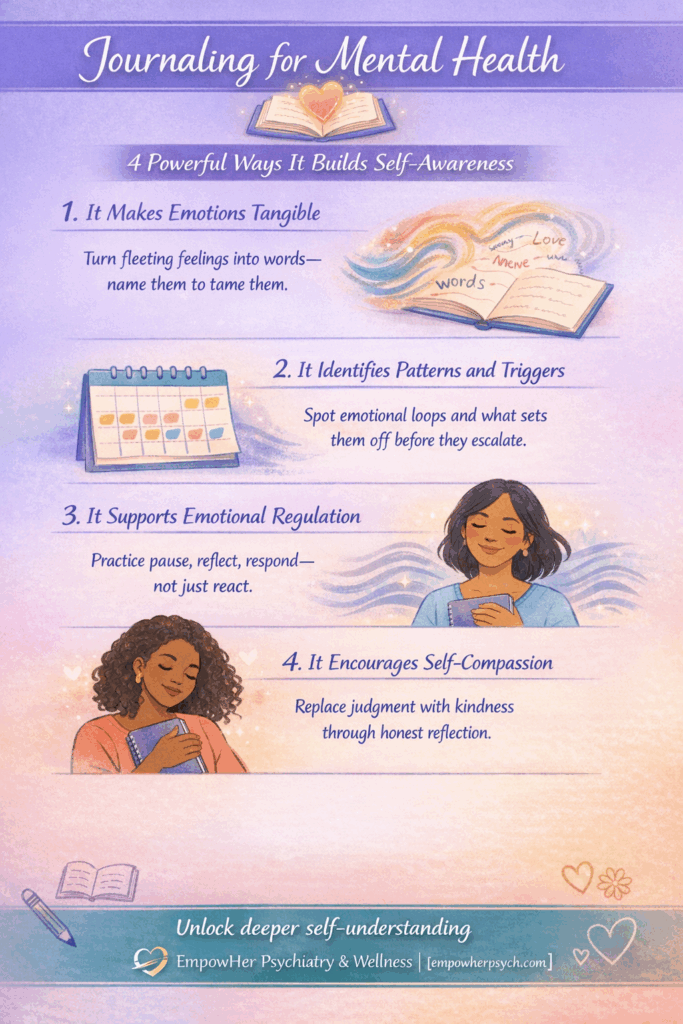
1. It Makes Emotions Tangible
Many women experience emotions that feel overwhelming or confusing. Writing them down gives them form, which helps you examine what’s really happening. For example, you might discover that a constant feeling of irritability is connected to fatigue or unacknowledged stress.
2. It Identifies Patterns and Triggers
Journaling allows you to track recurring themes in your emotions and reactions. Over time, you might notice patterns:
- Certain people or situations consistently trigger anxiety
- Specific times of day or life events increase stress
- Particular thoughts or self-talk amplify negative emotions
Recognizing these patterns is the first step toward change.
3. It Supports Emotional Regulation
When women write down intense feelings, it activates the brain’s reflective centers, which reduces the amygdala’s “fight or flight” response. This physiological shift makes it easier to respond thoughtfully rather than react impulsively, improving emotional regulation over time.
4. It Encourages Self-Compassion
Journaling provides a private, judgment-free space to nurture kindness toward yourself. Statements like:
“I am doing my best, even when things feel hard”
or
“It’s okay to feel tired and overwhelmed; this doesn’t define me”
can reinforce self-compassion, which is strongly linked to better mental health outcomes.
Different Ways to Journal for Mental Health
There’s no one “right” way to journal. The key is to make it consistent and intentional. Here are several approaches women can use:
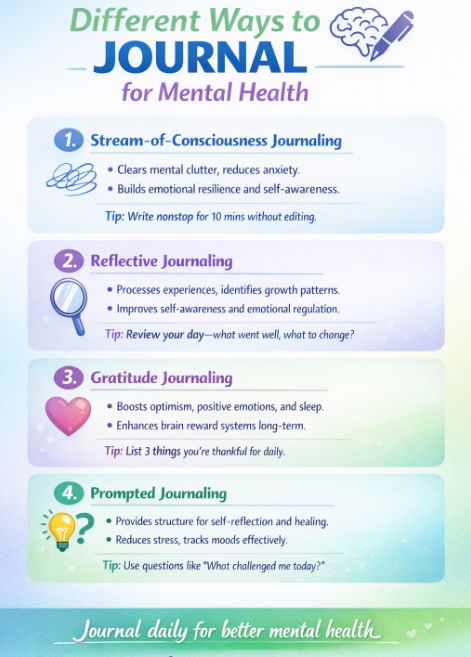
1. Stream-of-Consciousness Journaling
Stream-of-consciousness journaling is a free-flowing, unstructured approach that allows your thoughts and emotions to emerge without judgment or editing. It is especially helpful when feelings feel overwhelming or hard to articulate.
- Write continuously for a set amount of time, letting thoughts flow naturally onto the page without worrying about grammar, punctuation, or organization.
- Focus on whatever comes to mind—stress, gratitude, fears, dreams, or daily experiences. There’s no need to censor yourself.
- Helps uncover hidden emotions or concerns that may not surface in everyday thinking.
By observing your thoughts in real-time, stream-of-consciousness journaling helps you identify patterns, triggers, and recurring worries. Over time, this practice fosters clarity, self-awareness, and emotional regulation, making it easier to process complex feelings and respond thoughtfully rather than reactively.
2. Reflective Journaling
Reflective journaling is a more structured approach that encourages deep introspection about specific experiences, emotions, or interactions. It allows women to step back from the immediacy of life and explore their reactions thoughtfully.
- Reflect on a specific event, emotion, or interaction, such as a challenging conversation, a stressful day, or a moment of joy.
- Ask guiding questions like: What did I feel? Why did I feel it? How did I respond?
- Encourages insight and understanding of behavioral patterns, including recurring thoughts, triggers, or reactions that may affect mental health.
This method can be particularly valuable for women navigating life transitions, relationships, or work stress, as it helps create conscious awareness of emotional responses. Reflective journaling strengthens emotional resilience by allowing you to learn from experiences rather than feeling controlled by them.
3. Gratitude Journaling
Gratitude journaling shifts focus from stress, negativity, or perceived shortcomings to positive experiences and meaningful aspects of life. Research shows that practicing gratitude can enhance the mental health of women by reducing depressive symptoms, increasing well-being, and fostering resilience.
- List three things you’re grateful for each day, whether big or small. This could be a supportive friend, a moment of peace, or even a cup of coffee on a quiet morning.
- Helps shift focus from stress or negative emotions to positive experiences, training your brain to notice what is going well rather than dwelling solely on challenges.
- Supports resilience by reinforcing what is meaningful and grounding, even during times of difficulty.
Gratitude journaling is particularly effective when combined with other forms of self-reflection, helping women maintain emotional balance and strengthen the capacity to respond to stress in a healthy way.
4. Prompted Journaling
Prompted journaling provides guided reflection for areas of mental health that might feel difficult to explore spontaneously. Using prompts encourages deeper self-inquiry and insight, particularly when emotions feel stuck, confusing, or overwhelming.
- Use prompts to guide self-reflection, such as:
- “What emotion am I avoiding right now?”
- “How did I show myself kindness today?”
- “What am I holding onto that no longer serves me?”
- Prompts help you explore areas of mental health—like anxiety, grief, or self-criticism—that can be challenging to access without guidance.
Prompted journaling works well for women seeking structured insight into recurring thoughts, behavioral patterns, or emotional triggers. Over time, it strengthens self-awareness and emotional regulation, providing a reliable tool to navigate mental health challenges and daily stressors.
How Journaling Intersects with Women’s Mental Health
Writing about emotions, experiences, and stressors helps women engage directly with their mental health. Journaling can complement therapy, medication management, or other mental health strategies, and can also stand alone as a self-care tool.
Some ways journaling specifically benefits women’s mental health include:
- Stress reduction: Organizing thoughts on paper reduces mental clutter and anxiety
- Insight into triggers: Understanding the root causes of stress or guilt allows for proactive coping
- Improved decision-making: Greater self-awareness supports healthier choices
- Enhanced resilience: Journaling nurtures emotional resilience, helping women recover from setbacks more efficiently
Practical Tips for Starting a Journaling Habit
Building a journaling habit doesn’t have to be intimidating. Here are some actionable steps:
- Start small: Begin with 5–10 minutes per day rather than committing to long sessions
- Choose a comfortable space: Find a quiet, private environment where you can write without interruptions
- Be honest and nonjudgmental: The value of journaling comes from honesty, not perfection
- Experiment with formats: Try prompts, lists, letters to yourself, or free writing to find what feels most natural
- Review periodically: Occasionally read past entries to identify patterns, progress, and areas for growth
Supporting a Loved One in Using Journaling

If you’re caring for a family member or friend struggling with emotional overwhelm, journaling can be a gentle tool for them. Here’s how to offer support:
- Introduce it gently: Suggest journaling as an option, not a requirement
- Validate feelings: Encourage honesty in writing, without judgment
- Celebrate insights: Acknowledge moments of growth or self-awareness
- Avoid pressure: Journaling is effective when voluntary; forced writing can increase stress
Journaling is most effective when it’s part of a broader framework of support, including therapy, healthy boundaries, and emotional validation.
When to Seek Professional Help Alongside Journaling
While journaling is powerful, it isn’t a substitute for professional mental health care when needed. Signs that support may be necessary include:
- Persistent sadness, anxiety, or irritability that affects daily functioning
- Trauma-related symptoms like flashbacks, nightmares, or emotional numbness
- Difficulty coping with grief, loss, or major life transitions
- Chronic guilt or self-criticism
Making Journaling a Sustainable Part of Your Life
To benefit fully, journaling should become a consistent practice, not a one-time activity. Women who integrate journaling into their routine report:
- Greater clarity in understanding their thoughts and emotions
- Reduced stress and emotional overwhelm
- Improved coping skills for anxiety, depression, or guilt
- A stronger connection with their own needs and priorities
Think of journaling as a mirror for your mind—a space to explore, reflect, and grow.

A Final Word
Journaling for mental health is a simple yet transformative practice that helps women understand themselves better. By providing clarity, fostering self-compassion, and supporting emotional regulation, journaling becomes a bridge between internal reflection and actionable self-care.
If you’re struggling with anxiety, grief, life transitions, or emotional overwhelm, you don’t have to navigate it alone. At EmpowHer Psychiatry and Wellness, we provide compassionate, women-centered care—including therapy, medication management, and telehealth services—to help you understand yourself, process your emotions, and strengthen your mental health. Journaling can be a starting point, but professional support ensures your journey toward clarity, resilience, and well-being is safe, effective, and sustainable.
