

Life can be overwhelming. Stress, trauma, life transitions, and daily responsibilities can pile up, leaving many women feeling exhausted, anxious, or emotionally depleted. But there is a skill that can help buffer these challenges, restore balance, and support long-term well-being: emotional resilience.
Emotional resilience matters for women because it directly influences how they cope with stress, navigate difficult life changes, and protect their mental health. It’s not about being invincible or suppressing emotions—it’s about learning to adapt, recover, and thrive in the face of adversity.
In this article, we’ll explore why emotional resilience is crucial for women, how it connects to mental health, and practical ways to build it for yourself or support a loved one struggling right now.
Understanding Emotional Resilience
Emotional resilience is the ability to adapt and bounce back from stress, setbacks, or emotional challenges. It is not about avoiding difficult emotions; rather, it is the capacity to process them, learn from them, and continue moving forward with strength and clarity.
For women, emotional resilience often involves managing multiple roles—caregiver, professional, partner, parent—while navigating societal pressures and personal expectations. These pressures can intensify during major life transitions, hormonal changes, or experiences of trauma, making resilience not just beneficial but essential for maintaining mental health.
How Emotional Resilience Impacts Mental Health in Women
Emotional resilience plays a crucial role in shaping how women respond to stress, manage emotions, and protect their overall mental health.
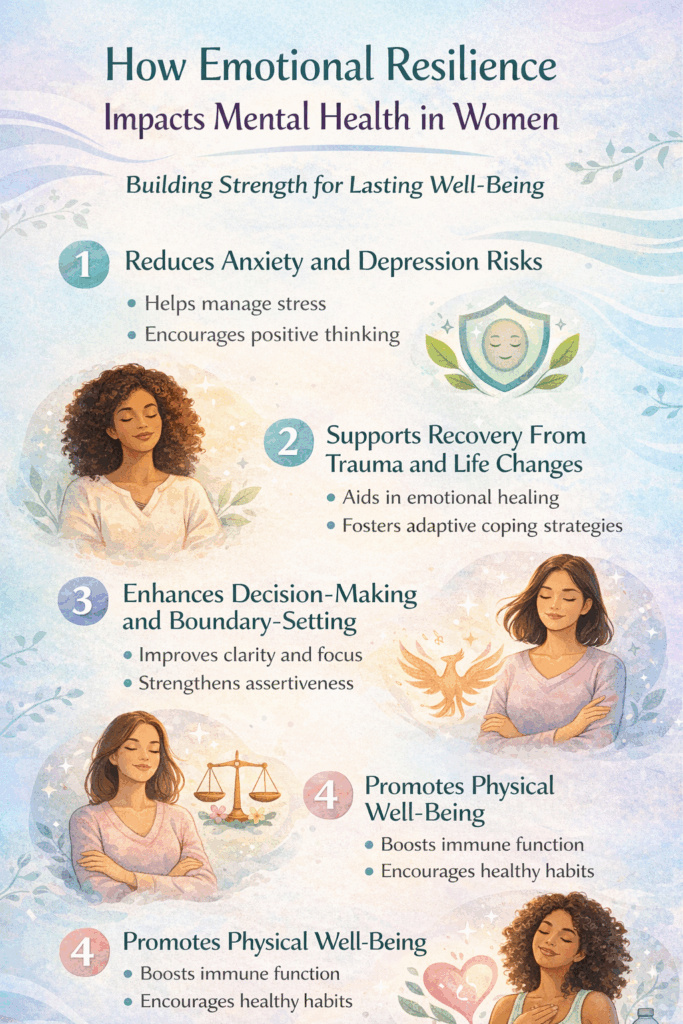
- Reduces Anxiety and Depression Risks
Women are statistically more likely to experience anxiety and depression than men. Emotional resilience helps buffer the effects of stress and negative emotions, providing coping strategies that reduce the risk of developing chronic mental health conditions in women. - Supports Recovery From Trauma and Life Changes
Whether it’s a career shift, relationship change, or personal loss, resilience enables women to process grief, disappointment, or trauma without becoming overwhelmed. This ability to recover is key to maintaining mental health over time. - Enhances Decision-Making and Boundary-Setting
A resilient mindset allows women to make decisions that protect their well-being, even in the face of guilt, fear, or social pressure. It also strengthens the ability to establish healthy boundaries, a critical factor in mental health. - Promotes Physical Well-Being
Stress directly affects the body through hormonal imbalances, sleep disruption, and immune system suppression. Emotional resilience helps women regulate stress, improving overall physical health, which in turn supports mental health.
The Unique Challenges Women Face That Make Emotional Resilience Critical
While everyone benefits from resilience, women often face unique challenges that make it especially crucial:
- Hormonal and Biological Factors
Fluctuating estrogen and progesterone levels, pregnancy, postpartum changes, and menopause can impact mood, energy, and emotional regulation. Resilience helps women adapt to these internal changes without feeling overwhelmed. - Societal Expectations
Women are frequently expected to prioritize family, relationships, and career simultaneously. These demands can increase stress and self-criticism, making emotional resilience vital for sustaining mental health. - Trauma and Abuse Histories
Many women have experienced trauma, abuse, or emotional neglect, which can leave lingering feelings of guilt, shame, or low self-worth. Emotional resilience provides the tools to process these experiences safely and recover psychologically. - Life Transitions
Significant shifts—such as divorce, career changes, motherhood, or caregiving—often test emotional limits. Resilience helps women navigate these transitions without falling into chronic anxiety or depression.
Signs That Emotional Resilience Needs Strengthening
You may benefit from intentionally building emotional resilience if you notice:
- Frequent feelings of overwhelm, hopelessness, or self-doubt
- Difficulty recovering from setbacks or emotionally stressful events
- Persistent guilt or anxiety when making decisions
- Strained relationships due to emotional reactivity
- Physical symptoms like fatigue, headaches, or insomnia tied to stress
Recognizing these signs is the first step toward cultivating resilience and improving mental health outcomes.
Practical Strategies for Building Emotional Resilience
Building emotional resilience is a gradual process. The goal is not perfection but sustainable growth. Here are evidence-based strategies that women can use:
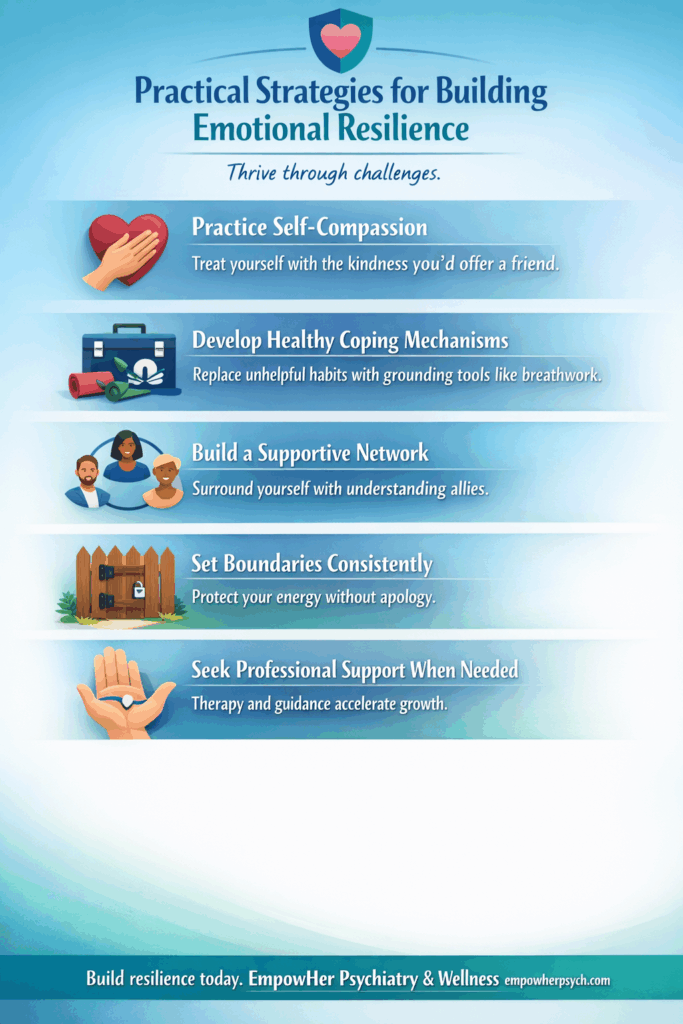
1. Practice Self-Compassion
Self-criticism erodes resilience. Instead, try self-compassion:
“I am allowed to feel stressed and overwhelmed. I am doing my best.”
This simple mindset shift helps reduce shame and guilt, making it easier to respond thoughtfully rather than reactively.
2. Develop Healthy Coping Mechanisms
Resilient women rely on coping strategies that support long-term mental health, such as:
- Mindfulness meditation or deep breathing exercises – Helps regulate stress hormones and brings awareness to the present moment.
- Journaling emotions without judgment – Provides clarity, releases pent-up feelings, and allows reflection on patterns.
- Physical activity – Walking, yoga, or cardio boosts mood-regulating neurotransmitters and reduces stress.
- Creative outlets – Engaging in art, music, or writing provides emotional expression and relief.
By integrating these activities into daily life, women gain a sense of control over emotional responses and strengthen their capacity to withstand challenges.
3. Build a Supportive Network
Isolation increases stress and mental health vulnerability. Surround yourself with people who:
- Validate your feelings without judgment
- Encourage self-care and boundaries
- Celebrate your growth and recovery
For family members and partners, offering steady support while avoiding pressure can help women strengthen resilience.
4. Set Boundaries Consistently
Protecting your energy is essential to emotional resilience. Boundaries are not selfish—they are a form of self-respect that prevents burnout and preserves mental health.
Effective boundary-setting involves:
- Saying no to requests that deplete your energy or conflict with priorities
- Delegating tasks at home, work, or in social situations
- Requesting space for rest, reflection, or self-care without guilt
- Communicating needs clearly and calmly to others
Practicing boundaries consistently allows women to maintain clarity, reduce overwhelm, and strengthen their internal sense of control. Boundaries are not a one-time action but an ongoing practice that supports long-term emotional stability.
5. Seek Professional Support When Needed
Sometimes, resilience alone is not enough to navigate complex mental health challenges. Professional support provides structured guidance, coping tools, and safety in processing difficult emotions.
Professional strategies may include:
- Psychotherapy – Individual, group, or trauma-informed therapy helps women process experiences and build emotional regulation skills.
- Medication Management – Psychiatric care can stabilize mood, reduce anxiety, and support the ability to implement resilience strategies effectively.
- Integrated Care Plans – Combining therapy, medication, and lifestyle interventions strengthens resilience more sustainably.
Recognizing when support is needed is a sign of strength, not weakness. Emotional resilience grows faster and more reliably when women have access to guidance, validation, and tools tailored to their mental health needs.
Supporting a Loved One in Building Resilience
If a family member or friend is struggling, your role can be vital. Here’s how to help without taking over:
- Validate Emotions: Listen without judgment. Avoid saying “just get over it.”
- Encourage Professional Help: Suggest therapy or psychiatric care if guilt, anxiety, or depression interfere with daily life.
- Promote Self-Care: Support them in prioritizing rest, boundaries, and healthy habits.
- Be Patient: Resilience grows gradually. Celebrate small steps rather than expecting immediate change.
Letting go of guilt, stress, and emotional overwhelm is easier when someone else believes in their right to prioritize mental health.
Emotional Resilience in Everyday Life
Emotional resilience isn’t reserved for crises—it shapes daily life. Women who nurture resilience tend to:
- Handle workplace stress with clarity and assertiveness
- Navigate family responsibilities without chronic guilt
- Process grief, loss, or disappointment more adaptively
- Experience better sleep, energy, and overall mental health
Building resilience is not about eliminating struggles; it’s about responding to them in a way that preserves your mental and emotional well-being.
A Final Word
Emotional resilience matters for women because it is a foundational tool for mental health, empowerment, and long-term well-being. Women who cultivate resilience are better equipped to face life’s challenges, recover from setbacks, and protect themselves from the negative impact of stress, trauma, or chronic mental health conditions.
If you or a loved one are struggling to navigate anxiety, depression, or life transitions, support is available. At EmpowHer Psychiatry and Wellness, we provide compassionate, women-centered care through therapy, medication management, and telehealth services. Let us help you build the emotional resilience you need to thrive—because your mental health deserves care, understanding, and respect.
