
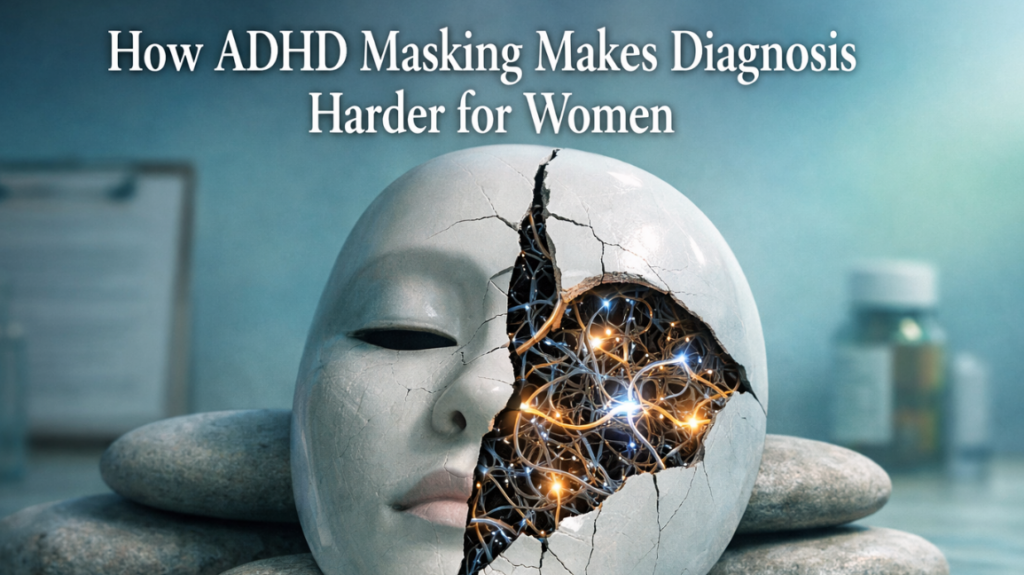
A woman sits in her doctor’s office describing chronic disorganization, emotional sensitivity, and mental exhaustion, only to hear that she “doesn’t seem like someone with ADHD” because she appears calm, competent, and on top of things. Years of effort go into projecting this image, but internally, ADHD masking drains her completely — mimicking expected behaviors to blend in while struggling with inattention, impulsivity, and overwhelm. With growing awareness of how ADHD masking affects women differently, diagnosis delays remain common, leading to mislabeled anxiety, depression, or burnout. Readers will walk away understanding ADHD masking patterns, why they obscure diagnosis, and clear steps toward recognition and support.
What Is ADHD Masking?
ADHD masking refers to the unconscious or deliberate strategies women with ADHD use to hide symptoms and appear “neurotypical.” It involves mimicking socially acceptable behaviors to compensate for executive function challenges like poor focus, time blindness, or emotional dysregulation.
This coping mechanism develops early, often in response to criticism or failure. Girls learn to sit still by fidgeting internally, complete tasks through sheer willpower, or rehearse conversations to avoid blurting impulsive thoughts. ADHD masking becomes second nature, making symptoms invisible to others — and sometimes even to themselves.
Unlike boys, who often receive earlier ADHD diagnoses due to hyperactive behaviors, girls internalize struggles. They perfect ADHD masking through people-pleasing, perfectionism, or overachievement, delaying recognition until adulthood when the effort becomes unsustainable.
Why Women Mask ADHD Symptoms Differently
Research shows ADHD presents differently across genders, with women more prone to the inattentive subtype. Hyperactivity looks quieter — daydreaming, losing items, or internal restlessness — easily dismissed as personality quirks.
ADHD masking thrives in this subtlety. Women expend massive cognitive energy on:
- Scripting social interactions to seem engaged
- Creating rigid routines to manage forgetfulness
- Hyper-focusing on details to offset distractibility
Societal expectations amplify this. Girls face pressure to be organized, empathetic, and composed, so ADHD masking aligns with those ideals. The result? Symptoms get labeled as laziness, hormonal issues, or stress rather than ADHD.
Common ADHD Masking Strategies Women Use

Women develop creative, exhausting workarounds for ADHD masking. These techniques provide short-term functionality but long-term burnout.
Typical strategies include:
- Hyper-organization tools: Excessive planners, apps, or lists to combat forgetfulness
- People-pleasing: Agreeing to commitments impulsively, then over-preparing to deliver
- Body doubling: Needing others present to start tasks, disguised as collaboration
- Emotional suppression: Hiding rejection sensitivity by withdrawing or over-apologizing
One woman described her ADHD masking as “acting like a functional human” — arriving early to meetings (to account for time blindness), smiling through internal chaos, and silently berating herself for zoning out. These habits hide ADHD masking from casual observation.
The Internal Cost of Constant Performance
ADHD masking demands constant vigilance. Women monitor themselves relentlessly, second-guessing every word or action. This mental overhead worsens original ADHD symptoms, creating a vicious cycle.
Exhaustion compounds over time. What starts as adaptive camouflage becomes a heavy costume — uncomfortable, restrictive, and increasingly impossible to maintain.
How ADHD Masking Delays Diagnosis
ADHD masking creates a perfect storm for misdiagnosis. Clinicians rely on observable behaviors, but masked women present as high-functioning despite internal turmoil.
Diagnostic criteria emphasize hyperactivity and impulsivity, missing subtler inattentive struggles. Women hear:
- “You’re too successful for ADHD”
- “It must be anxiety or depression”
- “Try harder with organization”
ADHD masking convinces even the women themselves. Years of compensating create doubt: “If I can function, maybe it’s not ADHD.” This self-gaslighting delays evaluation, prolonging unnecessary suffering.
Late Diagnosis Patterns in Women
Many women receive ADHD diagnosis only after major life stress unmasks symptoms — postpartum hormonal shifts, career demands, or relationship breakdowns. Suddenly, ADHD masking cracks under pressure.
One common story: a high-achieving professional thrives through college via caffeine and perfectionism, then collapses in motherhood when sleep deprivation strips coping capacity. ADHD masking fails, revealing the underlying neurology.
The Hidden Consequences of ADHD Masking
ADHD masking trades immediate acceptance for long-term damage. Chronic stress from performance elevates cortisol, contributing to anxiety, depression, and physical health issues.
Mentally, it erodes identity. Women question their authenticity: “Who am I without the mask?” Shame builds from hiding struggles, fostering isolation even in relationships.
Professionally, burnout looms. The energy required for ADHD masking leaves little for creativity or advancement, creating imposter syndrome despite real competence.
Signs You’re Engaging in ADHD Masking
Suspecting ADHD masking starts with noticing patterns others overlook. Self-awareness reveals the effort behind “easy” functioning.
Look for these indicators:
- Exhaustion after social/professional interactions despite appearing outgoing
- Mental preparation for routine tasks (rehearsing grocery lists mentally)
- Relief when alone — dropping the performance entirely
- Inconsistent performance — excelling in hyperfocus, crashing elsewhere
- Over-reliance on coping tools like endless reminders or caffeine
Women often describe ADHD masking as “running at 150% capacity just to appear normal.” Recognizing this mismatch validates the struggle and prompts exploration.
Why Women Suspect ADHD Later in Life
Social media and podcasts have accelerated ADHD awareness, particularly around ADHD masking in women. Viral stories of late-diagnosed adults resonate, sparking self-reflection.
Many realize past coping as ADHD masking retrospectively — the girl who doodled to focus, used drama club to channel energy, or became the “responsible one” through gritted teeth. Adulthood demands expose these as compensation, not strength.
Breaking Free from ADHD Masking
Unmasking ADHD involves selective vulnerability — sharing struggles with safe people, requesting accommodations, and embracing natural ADHD traits like creativity or empathy.
Therapy helps dismantle ADHD masking. Cognitive behavioral approaches reframe shame, while ADHD coaching builds sustainable systems replacing exhausting workarounds.
Medication, when appropriate, reduces baseline cognitive load, making ADHD masking unnecessary. Women report “operating at 80% capacity feels like 100%” post-treatment.
Seeking Diagnosis After Years of Masking
Professional evaluation remains crucial. Comprehensive assessments consider developmental history, not just current presentation, accounting for ADHD masking.
Prepare by:
- Documenting unmasked symptoms (private struggles, burnout episodes)
- Tracking ADHD masking examples (energy crashes, preparation rituals)
- Gathering collateral input from long-term observers
Expect validation, not judgment. Skilled clinicians recognize ADHD masking patterns and affirm the exhaustion behind high-functioning facades.
Support Strategies for Women Unmasking ADHD
ADHD masking served a purpose — survival. Transitioning requires compassion, not abrupt change.
Practical steps include:
- Selective unmasking: Test authenticity in low-stakes settings first
- Boundary setting: Decline overcommitments without over-explaining
- Community building: Connect with other ADHD women sharing unmasked experiences
- Self-compassion practice: Celebrate natural strengths, not just compensated ones
Support groups normalize ADHD masking recovery, offering solidarity absent during years of concealment.
When to Seek Professional Help for ADHD Masking

ADHD masking crosses into crisis when exhaustion manifests physically — chronic fatigue, migraines, or autoimmune flares — or mentally through depression and anxiety.
If daily functioning requires unsustainable effort, evaluation becomes urgent. ADHD masking delays not just diagnosis, but effective management.
Therapists specializing in adult ADHD and women’s mental health understand masking nuances, providing targeted guidance.
Conclusion
ADHD masking enables women to navigate neurotypical expectations at tremendous personal cost, hiding genuine ADHD struggles behind exhausting performance that delays diagnosis and breeds burnout. Recognizing ADHD masking patterns — hyper-organization, emotional suppression, and social scripting — reveals the truth beneath the facade and opens paths to authentic living. Women gain clarity on why their high-functioning struggles persist and practical steps toward assessment and relief.
EmpowHer Psychiatry and Wellness offers specialized support for women navigating ADHD, including talk therapy to unpack ADHD masking, medication management for symptom relief, and convenient telehealth consultations. Their compassionate providers understand late diagnosis realities and craft personalized wellness plans honoring each woman’s journey. Schedule an evaluation today to replace performance with genuine ease — clarity and support await.
