
Many people assume that social anxiety is simply another form of shyness. While shyness may involve feeling reserved or uncomfortable in certain situations, social anxiety goes much deeper. It is an intense fear of being judged, criticized, embarrassed, or rejected during everyday interactions. For many women, social anxiety can affect relationships, career growth, parenting, friendships, and overall quality of life. What may appear as quietness or introversion on the surface often hides a constant battle with self-doubt, worry, and emotional distress. Understanding social anxiety is an important step toward reducing stigma and helping women recognize when professional support may be beneficial.
Understanding Social Anxiety Beyond Shyness
Shyness is a personality trait that can make someone feel hesitant in unfamiliar social settings. Social anxiety, however, is a mental health condition characterized by overwhelming fear and distress related to social situations.
Women with social anxiety often spend significant time worrying about how they are perceived by others. They may replay conversations repeatedly, analyze their behavior, and fear making mistakes that could lead to embarrassment.
Unlike ordinary nervousness, social anxiety can interfere with daily functioning. Even routine interactions such as speaking during a meeting, attending social gatherings, making phone calls, or introducing oneself to new people can feel intimidating and emotionally exhausting.
The fear experienced by individuals with social anxiety is not simply a preference for solitude. It is often a persistent concern that others are watching, evaluating, or criticizing them.
Why Social Anxiety Often Goes Unnoticed in Women
Social anxiety does not always look the way people expect. Many women become skilled at hiding their struggles, making it difficult for friends, family members, and coworkers to recognize what they are experiencing.
Women with social anxiety may appear:
- Quiet or reserved in group settings
- Extremely prepared for presentations or meetings
- Highly self-critical
- Perfectionistic in their work or personal life
- Reluctant to express opinions
- Avoidant of social events
- Constantly concerned about pleasing others
Because these behaviors are sometimes viewed as personality traits rather than signs of emotional distress, social anxiety can remain undetected for years.
Some women become experts at masking their fears while internally experiencing intense anxiety. As a result, they may continue struggling without receiving the support they need.
Common Everyday Situations That Trigger Social Anxiety
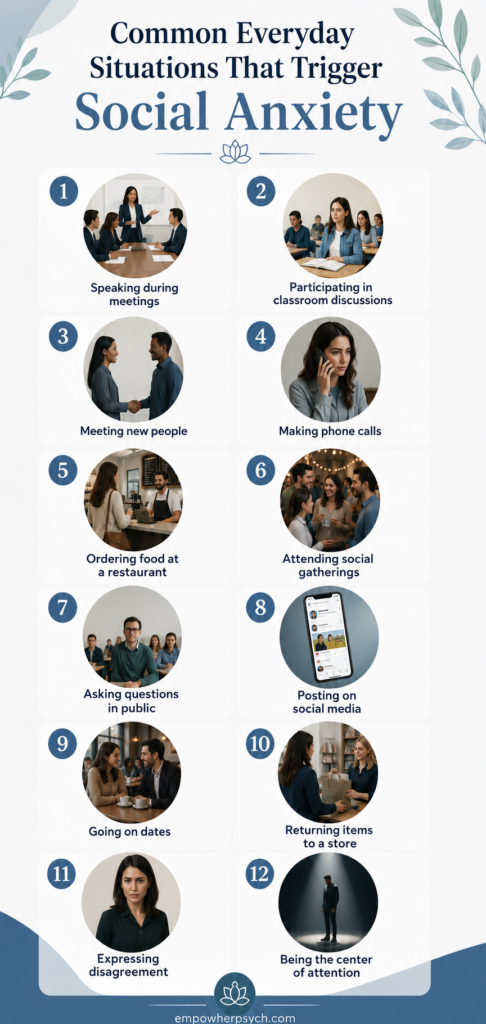
One of the most challenging aspects of it is that it can affect ordinary situations that most people encounter regularly.
Examples include:
- Speaking during meetings
- Participating in classroom discussions
- Meeting new people
- Making phone calls
- Ordering food at a restaurant
- Attending social gatherings
- Asking questions in public
- Posting on social media
- Going on dates
- Returning items to a store
- Expressing disagreement
- Being the center of attention
For someone experiencing it, these situations may trigger racing thoughts, physical symptoms, and an overwhelming urge to avoid participation altogether.
The anticipation of a social interaction can sometimes feel more distressing than the event itself.
Signs and Symptoms of Social Anxiety
Recognizing the symptoms of social anxiety can help women better understand what they are experiencing.
1. Emotional Symptoms
Women with social anxiety may experience:
- Intense fear of judgment
- Persistent worry before social events
- Feelings of embarrassment or humiliation
- Fear of making mistakes
- Excessive self-consciousness
- Difficulty relaxing around others
2. Physical Symptoms
It can also create noticeable physical reactions, including:
- Rapid heartbeat
- Sweating
- Trembling
- Shortness of breath
- Nausea
- Dizziness
- Muscle tension
- Flushing or blushing
These symptoms are real physiological responses that occur when the brain perceives social situations as threatening.
3. Behavioral Symptoms
Many women with social anxiety develop coping behaviors designed to reduce discomfort, such as:
- Avoiding social situations
- Leaving events early
- Staying silent during discussions
- Rehearsing conversations repeatedly
- Seeking constant reassurance
- Avoiding eye contact
- Declining invitations
While these behaviors may provide temporary relief, they often reinforce social anxiety over time.
The Impact of Social Anxiety on Daily Life
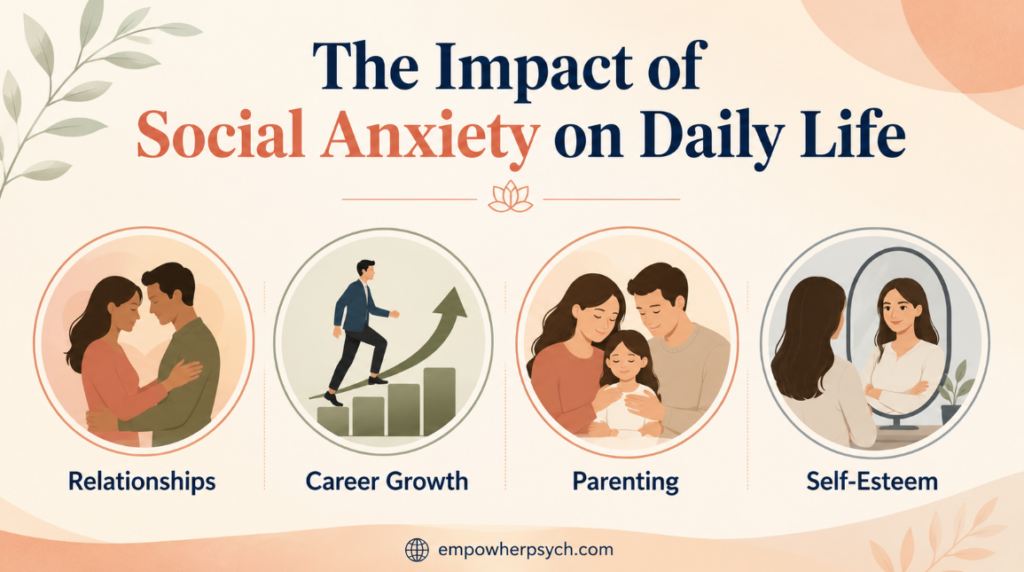
It can affect much more than social interactions. Its effects often extend into multiple areas of life.
1. Relationships
Fear of judgment can make it difficult to build new friendships or maintain existing relationships. Women with social anxiety may worry excessively about saying the wrong thing or being misunderstood.
This fear can create emotional distance, even when meaningful connection is desired.
2. Career Growth
Professional opportunities often involve communication, networking, presentations, and collaboration. It can make these responsibilities feel overwhelming.
Some women may avoid leadership positions, decline promotions, or remain silent despite having valuable ideas and expertise.
3. Parenting
Mothers experiencing social anxiety may struggle with activities that involve interacting with other parents, teachers, healthcare providers, or community groups.
Although they care deeply about their children, social fears can make certain parenting situations particularly stressful.
4. Self-Esteem
Over time, repeated self-criticism and fear of judgment can negatively impact self-confidence.
Many women with social anxiety begin to underestimate their strengths and capabilities, even when they are highly competent and accomplished.
Why Social Anxiety Develops
There is no single cause of it. Instead, several factors may contribute to its development.
1. Genetics
Research suggests that anxiety disorders can run in families. Individuals with a family history of anxiety may have a greater likelihood of developing social anxiety.
2. Life Experiences
Past experiences can influence how social situations are perceived.
Examples include:
- Bullying
- Public embarrassment
- Criticism
- Rejection
- Trauma
- Difficult childhood experiences
These experiences may shape beliefs about safety, acceptance, and self-worth.
3. Personality Traits
Certain personality characteristics, such as heightened sensitivity or behavioral inhibition, may increase vulnerability to social anxiety.
However, having these traits does not guarantee that someone will develop the condition.
4. Social and Cultural Pressures
Women often face unique societal expectations related to appearance, performance, relationships, motherhood, and success.
These pressures can contribute to self-consciousness and increase the risk of developing social anxiety.
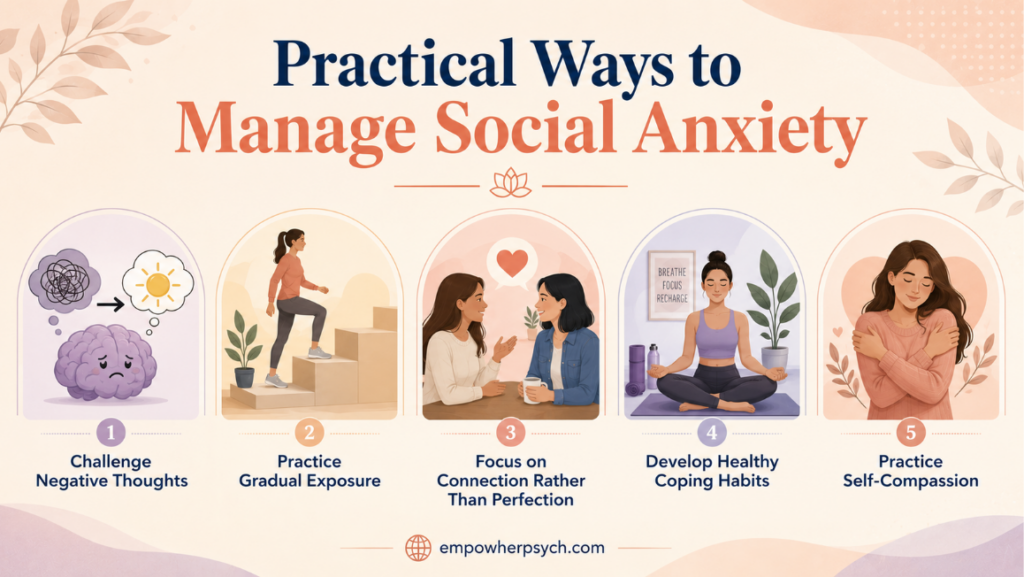
Practical Ways to Manage Social Anxiety
Although it can feel overwhelming, there are effective strategies that can help reduce its impact.
1. Challenge Negative Thoughts
Many women with social anxiety automatically assume the worst about social situations.
When anxious thoughts arise, ask yourself:
- What evidence supports this belief?
- What evidence contradicts it?
- Am I assuming others are judging me?
- What would I tell a friend experiencing this fear?
Questioning anxious thoughts can help create a more balanced perspective.
2. Practice Gradual Exposure
Avoidance often strengthens social anxiety. Gradually facing feared situations can help build confidence and reduce anxiety over time.
Examples may include:
- Starting a brief conversation
- Making a phone call
- Asking a question in a meeting
- Attending a small social gathering
Small steps can create meaningful progress.
3. Focus on Connection Rather Than Perfection
Many women with social anxiety place enormous pressure on themselves to perform perfectly.
Instead of focusing on saying the perfect thing, focus on being present and connecting with others authentically.
Most people are far less critical than social anxiety suggests.
4. Develop Healthy Coping Habits
Supporting overall mental wellness can help reduce anxiety symptoms.
Helpful habits include:
- Regular physical activity
- Consistent sleep routines
- Mindfulness practices
- Deep breathing exercises
- Balanced nutrition
- Limiting excessive caffeine intake
These practices can help regulate the body’s stress response.
5. Practice Self-Compassion
Social anxiety often comes with harsh self-judgment.
Treating yourself with kindness during difficult moments can improve emotional resilience and reduce feelings of shame.
Remember that struggling with social anxiety does not reflect weakness or personal failure.
Breaking the Cycle: Supporting Children Before Social Anxiety Develops
If you find yourself recognizing patterns of social anxiety in your own life, it is natural to begin thinking about how to prevent the same struggles in your children. Many women who experience social anxiety become deeply aware of how early experiences, emotional environments, and social pressures can shape confidence and self-expression later in life. This awareness is not about blame—it is about breaking cycles with intention and care.
One important way to support healthy emotional development in children is through peer interaction and early social exposure in safe, supportive environments. When children are gently encouraged to engage with others, express themselves, and navigate small social challenges, they begin to build confidence in their ability to connect without fear of judgment. These early experiences can significantly reduce the likelihood of developing intense social fears later in life.
This is also where open-ended toys in child development can play an important role. Unlike structured or outcome-focused toys, open-ended toys encourage creativity, imagination, and self-directed play. They naturally promote communication, cooperation, and problem-solving when used with peers, helping children build emotional flexibility and social confidence in a low-pressure way.
By supporting both emotional safety and social exploration early in life, parents can help children develop a stronger foundation of resilience, self-expression, and ease in social settings—skills that protect against the development of social anxiety later on.
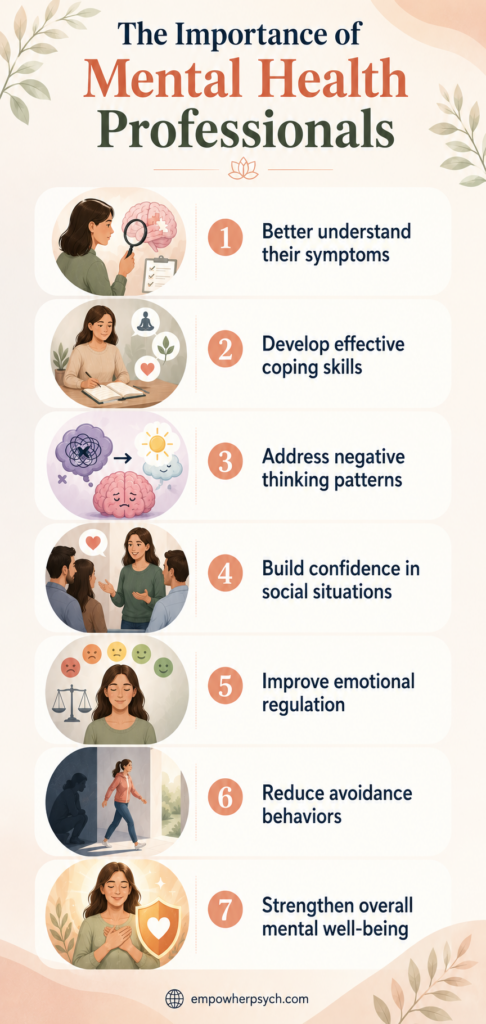
The Importance of Mental Health Professionals
While self-help strategies can be valuable, professional support is often an important part of managing social anxiety effectively.
Mental health professionals are trained to identify the underlying factors contributing to anxiety and create individualized treatment plans based on each person’s needs.
Professional support can help women:
- Better understand their symptoms
- Develop effective coping skills
- Address negative thinking patterns
- Build confidence in social situations
- Improve emotional regulation
- Reduce avoidance behaviors
- Strengthen overall mental well-being
Seeking support is not a sign of weakness. It is a proactive step toward improving quality of life and emotional health.
With appropriate care, many women experience significant improvement in their symptoms and gain the confidence to participate more fully in their personal, social, and professional lives.
You Deserve More Than Just Getting Through the Day
Living with social anxiety can feel exhausting. Constantly worrying about what others think, avoiding situations that matter to you, and second-guessing every interaction can take a significant emotional toll. Yet social anxiety does not have to dictate your choices, limit your opportunities, or define your future. Understanding what you are experiencing is the first step toward creating meaningful change and building greater confidence in everyday life.
EmpowHer Psychiatry and Wellness is dedicated to empowering women, nurturing minds, and transforming lives across the lifespan. If social anxiety is affecting your relationships, career, parenting journey, or overall well-being, compassionate support is available. Reaching out to a qualified mental health professional can help you gain practical tools, strengthen resilience, and move toward a life guided by confidence rather than fear.
