

Even when life seems under control, you may sometimes feel like you’re barely keeping up. You smile, perform well at work, maintain relationships, and check all the boxes of daily life—but inside, exhaustion, sadness, and emptiness quietly persist. This is the paradox of high functioning depression: outwardly, you may appear fine, but inwardly, you are struggling. It is a phenomenon that affects many women, from young professionals climbing the career ladder to mothers balancing work and home life. Understanding what high functioning depression looks like, how it manifests, and when to seek support can empower you to prioritize your mental well-being before symptoms escalate.
It’s important to note that high functioning depression is not a formal medical diagnosis. Clinicians often use it as a descriptive term to help explain a pattern where depressive symptoms are present yet daily responsibilities are maintained. While it may not appear in a diagnostic manual, the experiences of those who live with it are very real and deserve attention.
The Hidden Struggle: How High Functioning Depression Shows Up in Women
High functioning depression is characterized by the ability to continue daily responsibilities while experiencing persistent low mood, fatigue, or emotional numbness. Many women experiencing this may feel pressure to maintain an appearance of success, both personally and professionally, even while struggling internally.
- You may meet deadlines at work and maintain social obligations but feel drained afterward.
- You may feel constant guilt or shame for struggling while appearing “fine” to others.
- Emotional numbness can make it difficult to connect with joy or satisfaction.
While the term itself is informal, it often overlaps with clinically recognized conditions such as persistent depressive disorder (dysthymia) or major depressive disorder in women. Recognizing the signs early can prevent symptoms from worsening or evolving into more severe depression.
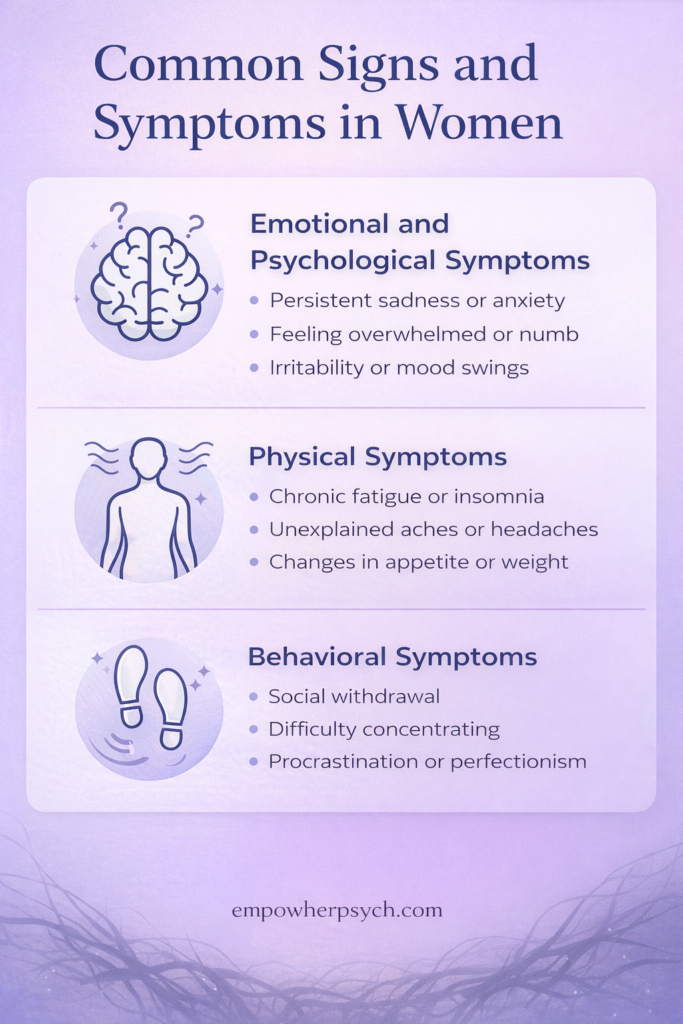
Common Signs and Symptoms in Women
Women with high functioning depression often present symptoms that are subtle or easily overlooked. Unlike severe depression, these symptoms may not prevent you from functioning, but they can slowly erode quality of life over time.
Emotional and psychological symptoms:
- Persistent sadness or emptiness that doesn’t go away
- Irritability or frustration over minor issues
- Feeling overwhelmed despite outward success
- Difficulty experiencing joy or pleasure in activities you used to enjoy
- Excessive self-criticism or perfectionism
Physical symptoms:
- Chronic fatigue, low energy, or feelings of heaviness
- Sleep disturbances, including insomnia or oversleeping
- Changes in appetite or weight
- Headaches, muscle tension, or gastrointestinal issues
Behavioral symptoms:
- Overworking to compensate for low mood
- Social withdrawal despite appearing socially active
- Avoidance of difficult emotions through busyness
- Relying on routines or habits to maintain a sense of control
Recognizing these patterns is crucial because many women dismiss these experiences as normal stress or being “too busy,” when in fact they may indicate high functioning depression.
Why It Often Goes Unnoticed
One of the reasons high functioning depression is so common among women is that society often expects women to juggle multiple roles flawlessly. The stigma around mental health can make admitting to emotional struggles feel like a weakness. Even health professionals may not immediately identify it because the individual appears high-functioning on the outside.
- Successful women may push themselves harder to hide symptoms.
- Young women may feel that they must “prove themselves” in career or social life.
- Normalizing fatigue or low mood can delay seeking professional help.
Because the outward appearance contradicts the internal experience, high functioning depression is often underdiagnosed and undertreated.
Common Myths About High Functioning Depression
There are several misconceptions about high functioning depression that can prevent women from seeking help or even recognizing their own symptoms. Understanding these myths helps dismantle stigma and encourages proactive care.
- Myth 1: “If you’re functioning, you’re not depressed.”
Many women hide their struggles while maintaining daily responsibilities. Functioning externally does not mean you are thriving internally. - Myth 2: “Depression is just sadness.”
Depression can manifest as fatigue, irritability, numbness, perfectionism, or loss of motivation—not always overt sadness. - Myth 3: “Therapy is only for crises.”
Even high-functioning individuals benefit from early therapy to prevent worsening symptoms and learn coping strategies. - Myth 4: “Medication is only for severe cases.”
Medication can support recovery at any stage, especially when combined with therapy, even for those who appear functional.
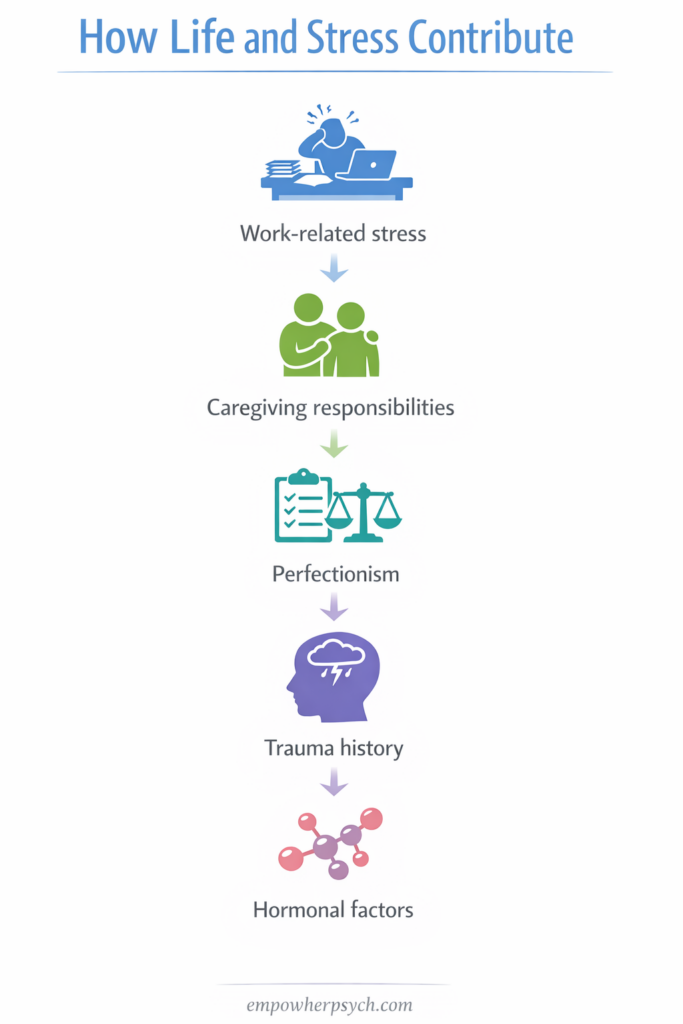
How Life and Stress Contribute
Several factors can contribute to high functioning depression, particularly in women navigating busy lives:
- Work-related stress: High expectations, long hours, and career pressures can exacerbate low mood.
- Caregiving responsibilities: Balancing parenting, family, or caregiving roles with personal needs often leads to emotional depletion.
- Perfectionism: Women may set unrealistically high standards for themselves, creating constant pressure and self-criticism.
- Trauma history: Past emotional or physical trauma can predispose women to persistent depressive patterns.
- Hormonal factors: Life stages such as postpartum, perimenopause, or hormonal fluctuations may amplify depressive symptoms.
Understanding these contributing factors can help women identify why they may be feeling exhausted even when life appears “under control.”
Hidden Challenges Women Face
Women often encounter unique challenges when dealing with high functioning depression, which can make the condition harder to recognize and address.
- Balancing multiple roles: Careers, family, and social responsibilities increase emotional load.
- Perfectionism and self-expectations: Pressure to “do it all” can mask symptoms and delay seeking help.
- Social invisibility of depression: Friends and colleagues may not notice signs, leaving women feeling isolated.
- Guilt and shame: Many women feel they “shouldn’t struggle,” reinforcing secrecy and avoidance.
Recognizing these hidden challenges can help women validate their experiences and take steps toward meaningful support.
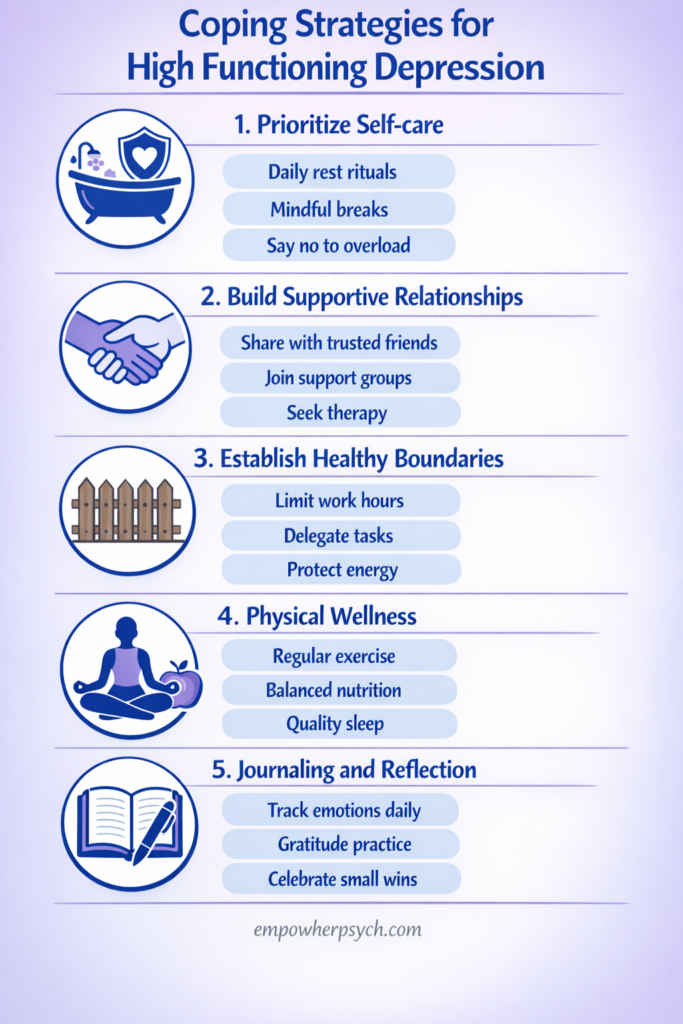
Coping Strategies for High Functioning Depression
While professional treatment is important, there are evidence-based coping strategies that can help women manage symptoms of high functioning depression in daily life:
1. Prioritize Self-care
- Schedule short breaks during the day
- Engage in enjoyable activities, even for a few minutes
- Practice mindfulness or meditation to reduce rumination
2. Build Supportive Relationships
- Share your feelings with trusted friends or family
- Join peer support groups for women dealing with similar challenges
- Seek mentorship or guidance for life balance
3. Establish Healthy Boundaries
- Learn to say no to extra commitments
- Reduce exposure to negative influences or toxic environments
- Protect personal time for rest and self-reflection
4. Physical Wellness
- Maintain regular exercise to boost mood and energy
- Follow a balanced diet with sufficient nutrients
- Ensure consistent sleep hygiene
5. Journaling and Reflection
- Write down your emotions to track patterns
- Reflect on triggers and coping mechanisms
- Use journaling as a tool to process feelings constructively
These strategies do not replace professional care, but they provide a foundation for emotional resilience and can complement treatment approaches.
Misconceptions About Coping
Many women try to manage high functioning depression with coping strategies that are well-intentioned but ineffective in the long term. Understanding these misconceptions allows for healthier alternatives.
- “Keeping busy will make it go away.”
Overworking can temporarily distract, but it often deepens exhaustion and emotional numbness. - “I can fix this on my own.”
While personal coping helps, professional support can address underlying patterns and provide structured guidance. - “Hiding it protects me.”
Concealing symptoms may maintain appearances, but it often increases stress and delays recovery. - “Self-care is enough.”
Self-care is valuable, but therapy and/or medication may be necessary to fully manage symptoms.
Professional Support Options
Women experiencing high functioning depression often benefit from professional support, even if they are still managing daily responsibilities. There are multiple evidence-based options:
1. Talk Therapy
- Provides a safe, nonjudgmental space to explore emotions
- Helps uncover underlying causes of depression, such as trauma or stress
- Offers coping tools to reduce emotional overload
2. Medication Management
- Certain antidepressants or combination treatments can support mood regulation
- Medication is often considered when symptoms interfere with daily functioning or persist despite therapy
- A licensed professional can assess risks and tailor treatment to individual needs
3. Telehealth and Online Support
- Offers convenience for women with busy schedules
- Provides access to care without the stress of commuting
- Reduces barriers to regular therapy or medication follow-up
Engaging with professional care does not mean you are “weak” or failing—it means you are taking proactive steps toward well-being.
When to Seek Help
It can be difficult to know when high functioning depression requires professional intervention. Consider seeking help if you notice any of the following:
- Persistent sadness, emptiness, or irritability lasting more than two weeks
- Chronic fatigue affecting daily performance
- Loss of interest in activities you usually enjoy
- Difficulty connecting with friends, family, or coworkers
- Thoughts of self-harm or hopelessness (seek help immediately)
Even if you are functioning well externally, persistent internal struggle deserves attention. Early intervention often leads to more effective treatment outcomes.
Overcoming Stigma
One of the biggest barriers to addressing high functioning depression is stigma. Many women feel they should be able to manage everything on their own. But experiencing depression does not reflect a lack of strength—it reflects being human.
- Acknowledge your feelings without judgment
- Share experiences with trusted peers or mentors
- Educate yourself on mental health to normalize seeking support
Reducing stigma allows women to pursue care before symptoms escalate, promoting long-term wellness and emotional resilience.
Supporting Others

If you notice a friend, colleague, or family member exhibiting signs of high functioning depression, consider these approaches:
- Encourage open conversation without pressure
- Offer practical support, like helping with tasks or sharing resources
- Avoid minimizing their experience; acknowledge their feelings
- Suggest professional care if symptoms persist or worsen
Being supportive can make a significant difference in helping someone seek help sooner rather than later.
Final Thoughts
High functioning depression is a common, often invisible struggle where women may appear successful and put together while internally battling persistent low mood, fatigue, and emotional numbness. Though it is not a formal medical diagnosis, the experiences of those who live with it are real and deserve attention. By recognizing symptoms, understanding contributing factors, implementing self-care strategies, and seeking professional support, women can regain energy, emotional balance, and overall well-being. Early awareness and intervention are crucial, especially for young women, mothers, and professionals juggling multiple roles.
If you recognize these experiences in yourself or someone you care about, taking action now can make a meaningful difference. Professional support—through therapy, medication management, or telehealth—can help manage high functioning depression effectively and prevent symptoms from worsening. EmpowHer Psychiatry and Wellness offers compassionate, women-focused psychiatric care, providing personalized guidance and support to help women reclaim emotional balance, energy, and mental wellness. Reaching out for help is a strong and proactive step toward feeling fully supported and understood.
