
Life rarely changes all at once—until it does. One season you feel certain of your direction, your identity, and your plans. Then suddenly, a career shift, a breakup, motherhood, loss, relocation, burnout, or even personal growth can place you in unfamiliar emotional territory. These transitions can feel destabilizing, even when they lead to something better. What often determines whether someone merely survives these changes or grows through them is their ability to build emotional resilience.
For women especially, life transitions often come with layered expectations—be strong, stay productive, care for others, and somehow still care for yourself. Emotional resilience is not about pretending everything is fine. It is about learning how to bend without breaking, to feel deeply without drowning, and to adapt without losing yourself.
This guide explores how women can build emotional resilience during difficult life transitions through practical, thoughtful, and realistic strategies that support emotional strength without demanding perfection.
Understanding Emotional Resilience Beyond “Being Strong”
Emotional resilience is not about toughness—it is about flexibility.
Many people misunderstand resilience as emotional invincibility. In reality, resilience is your nervous system’s ability to recover, your mind’s ability to reframe, and your heart’s ability to remain open even after disappointment.
When women try to build emotional resilience, they are not trying to eliminate stress or sadness. They are developing the capacity to:
- Process change without losing their sense of identity
- Adapt without shutting down emotionally
- Handle uncertainty without constant fear
- Recover from emotional setbacks more quickly
- Maintain self-trust during unpredictable seasons
Resilience looks like:
- Feeling grief but still showing up for your life
- Feeling fear but still making thoughtful decisions
- Feeling uncertainty but still moving forward
- Feeling overwhelmed but learning how to reset
The goal is not emotional perfection. The goal is emotional recovery.
Why Life Transitions Can Feel Especially Heavy for Women

Transitions often affect not just your circumstances—but your identity.
Women often tie identity to roles: professional, partner, caregiver, daughter, leader, or nurturer. When one role changes, it can feel like your emotional foundation shifts too.
Common life transitions that may require you to build emotional resilience include:
- Career changes or job loss
- Marriage, divorce, or relationship shifts
- Becoming a mother or empty nesting
- Moving to a new city or country
- Health challenges
- Personal reinvention after burnout
- Caring for aging parents
- Rediscovering yourself after years of prioritizing others
What makes transitions difficult is not just the external change—it is the internal questions that follow:
- Who am I now?
- Did I make the right decision?
- What if I fail?
- What if I can’t handle this?
Resilience develops when you learn to sit with these questions without letting them define your worth.
Accepting That Emotional Discomfort Is Part of Growth
Resistance often creates more suffering than the transition itself.
One of the fastest ways to weaken emotional resilience is to fight reality. Many women feel pressure to “handle things gracefully,” which sometimes translates into suppressing natural emotional reactions.
To truly build emotional resilience, emotional honesty must replace emotional avoidance.
This means allowing yourself to:
- Acknowledge fear instead of denying it
- Admit sadness without labeling it weakness
- Recognize anger as information, not failure
- Accept confusion as part of transformation
Healthy emotional processing might look like:
- Journaling difficult thoughts instead of ignoring them
- Talking to someone safe instead of isolating
- Allowing yourself to cry without self-judgment
- Taking breaks when overwhelmed instead of pushing through exhaustion
Growth rarely feels comfortable while it is happening. But discomfort does not mean you are failing. Often, it means you are adapting.
Strengthening Your Inner Dialogue During Uncertain Times
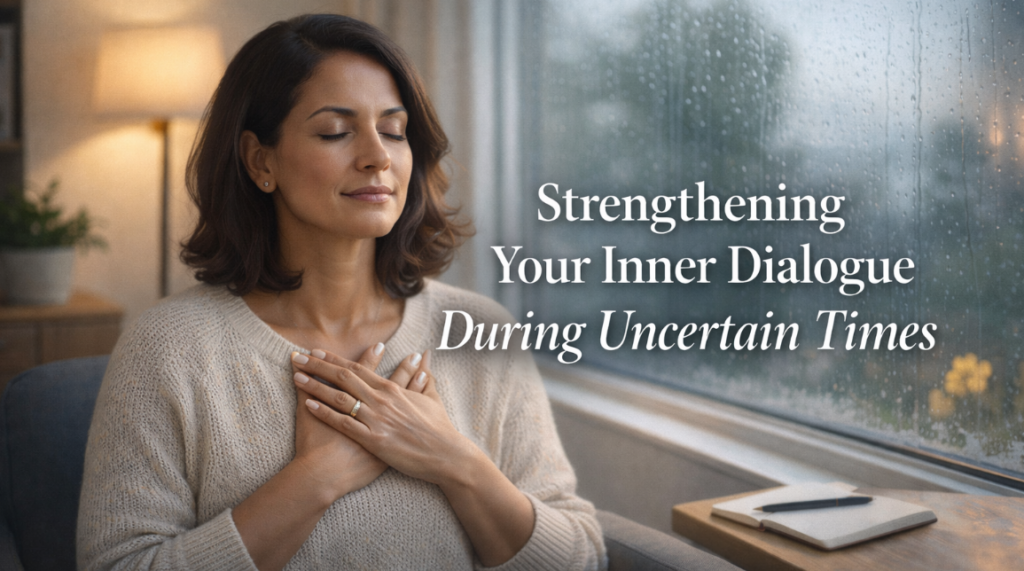
The voice you speak to yourself with becomes your emotional environment.
During difficult transitions, your external life may feel unstable. Your internal dialogue becomes your most constant companion. Women who successfully build emotional resilience often develop a supportive inner voice instead of a critical one.
Destructive inner dialogue sounds like:
- I should be handling this better.
- Everyone else seems stronger than me.
- I always mess things up.
- I don’t know what I’m doing.
Resilient inner dialogue sounds like:
- This is hard, but I am learning.
- I can figure this out one step at a time.
- It’s okay to not have everything solved today.
- I have handled hard things before.
Ways to strengthen your internal support system:
- Replace harsh self-talk with neutral observations
- Practice self-compassion statements
- Track small wins daily
- Challenge catastrophic thinking
- Focus on effort rather than perfection
Your brain listens to how you talk to yourself. Resilience grows when your inner voice becomes an ally instead of an adversary.
Building Emotional Stability Through Small Daily Habits
Resilience is built through routines, not dramatic breakthroughs.
Many people think emotional strength comes from major life insights. More often, it comes from small daily regulation habits that stabilize your nervous system.
If you want to consistently build emotional resilience, focus on habits that support emotional recovery:
Simple daily resilience builders include:
Physical regulation habits:
- Getting consistent sleep schedules
- Walking outdoors regularly
- Drinking enough water
- Eating regularly instead of stress-skipping meals
- Stretching or light movement
Mental regulation habits:
- Limiting doom-scrolling
- Setting realistic daily goals
- Taking intentional pauses between tasks
- Practicing gratitude reflection
- Protecting quiet thinking time
Emotional regulation habits:
- Naming emotions instead of suppressing them
- Setting small personal boundaries
- Practicing saying “not right now”
- Scheduling recovery time after stressful events
Resilience grows when your daily life includes recovery, not just responsibility.
Learning How to Adapt Instead of Control Everything
Resilience increases when flexibility replaces control.
Transitions often feel painful because they remove certainty. Many women cope by trying to control every detail. Unfortunately, control is fragile when life is changing.
To build emotional resilience, it helps to distinguish between what you can influence and what you cannot.
You can control:
- Your effort
- Your preparation
- Your reactions
- Your boundaries
- Your willingness to learn
You cannot control:
- Other people’s opinions
- Timing of outcomes
- Unexpected changes
- Everyone’s approval
- Every possible risk
Healthy adaptability includes:
- Making flexible plans instead of rigid ones
- Creating backup options
- Viewing mistakes as feedback
- Adjusting expectations without abandoning goals
- Accepting imperfect progress
Emotional resilience is not losing control. It is learning where control actually belongs.
Creating a Support System That Matches Your New Season
The right support system changes as your life changes.
Some transitions reveal that certain relationships only fit your past identity. This realization can feel lonely but also necessary.
Women who intentionally build emotional resilience often reevaluate their emotional environment.
Healthy support systems may include:
- Friends who listen without fixing
- Mentors who have experienced similar transitions
- Therapists or coaches
- Family members who respect your growth
- Communities aligned with your current goals
Support that strengthens resilience usually feels:
- Safe instead of judgmental
- Encouraging instead of competitive
- Honest instead of performative
- Respectful of your boundaries
It may also mean reducing exposure to:
- Chronic negativity
- Dismissive attitudes
- Emotional invalidation
- Comparisons that drain confidence
Resilience is easier to maintain when your environment supports your healing instead of challenging it constantly.
Redefining Success During Personal Change
Your old definition of success may not serve your new life.
Transitions often require redefining what progress looks like. Many women feel discouraged because they measure themselves using outdated standards.
To effectively build emotional resilience, redefine success in ways that reflect your current reality.
New definitions of success might include:
- Handling stress more calmly than before
- Setting one healthy boundary
- Taking one brave step despite fear
- Choosing rest instead of burnout
- Asking for help when needed
- Letting go of something misaligned
Resilient thinking reframes progress from:
“Am I where I thought I would be?”
to:
“Am I responding to life with more awareness than before?”
This shift protects your self-esteem while you rebuild stability.
Practicing Self-Trust During Reinvention Periods
Transitions often ask you to trust a version of yourself you are still becoming.
Perhaps the most overlooked aspect of emotional strength is self-trust. When women build emotional resilience, they often strengthen their belief that they can handle whatever happens next—even if they cannot predict it.
Ways to strengthen self-trust:
- Keep small promises to yourself
- Reflect on past resilience moments
- Stop outsourcing every decision
- Accept that mistakes are part of competence
- Celebrate personal courage, not just outcomes
Self-trust grows when you realize:
- You can survive uncertainty
- You can adjust when needed
- You can ask for help
- You can start again if necessary
Confidence does not come from guarantees. It comes from repeated evidence that you can recover.
Letting Go of the Timeline You Thought Your Life Would Follow
One hidden resilience skill is grieving the plan you once had.
Sometimes the hardest part of transition is not what is happening—it is what did not happen.
Women often carry silent grief about:
- The career path they imagined
- The relationship they expected to last
- The timing they planned
- The version of themselves they thought they would be
To truly build emotional resilience, you may need to allow space for this grief without seeing it as failure.
Healthy release practices may include:
- Writing a goodbye letter to a past chapter
- Acknowledging lessons gained
- Identifying what still remains valuable
- Allowing mixed emotions (relief and sadness can coexist)
- Creating new personal meaning
Letting go is not giving up. It is creating space for alignment.
Protecting Your Energy While You Rebuild Stability
Energy management is emotional resilience in practical form.
During transitions, your emotional bandwidth may be lower. Women who successfully build emotional resilience often become more intentional about where their energy goes.
Energy protection may include:
What to reduce:
- Overcommitting
- Emotional labor without reciprocity
- Constant availability
- Comparing your journey online
- Saying yes out of guilt
What to increase:
- Recovery time
- Quiet thinking space
- Activities that restore identity
- Honest communication
- Time with emotionally safe people
Boundaries are not walls. They are filters that protect your healing process.
Recognizing That Resilience Is Already Part of Your Story
You are likely more resilient than you realize.
Often, women trying to build emotional resilience overlook the evidence already present in their lives.
Consider what you have already navigated:
- Difficult decisions you survived
- Losses you processed
- Risks you took
- Times you started over
- Moments you kept going despite fear
Resilience is rarely something you start from zero. More often, it is something you recognize, strengthen, and apply more intentionally.
The Truth About Emotional Resilience Most People Learn Too Late
Every difficult life transition asks something different from you—but they all ask one common thing: adaptation. Emotional resilience is not a personality trait reserved for a strong few. It is a learnable response pattern that develops when women allow themselves to feel, adjust, recover, and continue forward with greater awareness. When you build emotional resilience, you are not just surviving change—you are becoming someone who can navigate uncertainty without losing her center. That process involves strengthening self-trust, managing emotional energy, creating supportive environments, and redefining success in ways that protect your mental well-being while you grow.
And perhaps the most important truth is this: resilience does not mean you stop feeling the weight of change. It means you learn you can carry it differently. If you are currently in a season of transition, this may be the exact time to strengthen your emotional foundation instead of just pushing through circumstances. If you want structured, compassionate support while learning how to build emotional resilience during life’s most demanding transitions, reaching out to professionals like EmpowHer Psychiatry and Wellness can be a meaningful next step toward stability, clarity, and emotional strength that lasts beyond the current chapter.
