
There are seasons in life when exhaustion feels bone-deep — not just physical, but mental, emotional, and spiritual. For those living with Attention-Deficit/Hyperactivity Disorder (ADHD), this isn’t occasional fatigue; it’s what many call ADHD burnout — an overwhelming, chronic exhaustion that can make each day feel like an uphill battle.
Before diving deeper, you might also want to explore a related topic, ADHD in Women, which dives into how gender differences influence ADHD symptoms and coping mechanisms.
What Is ADHD Burnout?
ADHD burnout happens when prolonged mental and emotional strain outpaces your ability to cope. It arises from the unique challenges ADHD brings — the constant need to focus, manage time, mask symptoms, and keep up with expectations that often don’t align with how the ADHD brain works.
Unlike general burnout that might fade with a weekend off, ADHD burnout is persistent. It doesn’t just come from overworking; it’s the wear-and-tear of trying to function in systems that don’t understand your wiring.
Imagine running a race where everyone else is cycling — you can technically keep up, but only by burning twice as much energy. That’s what daily life can feel like for someone with ADHD.
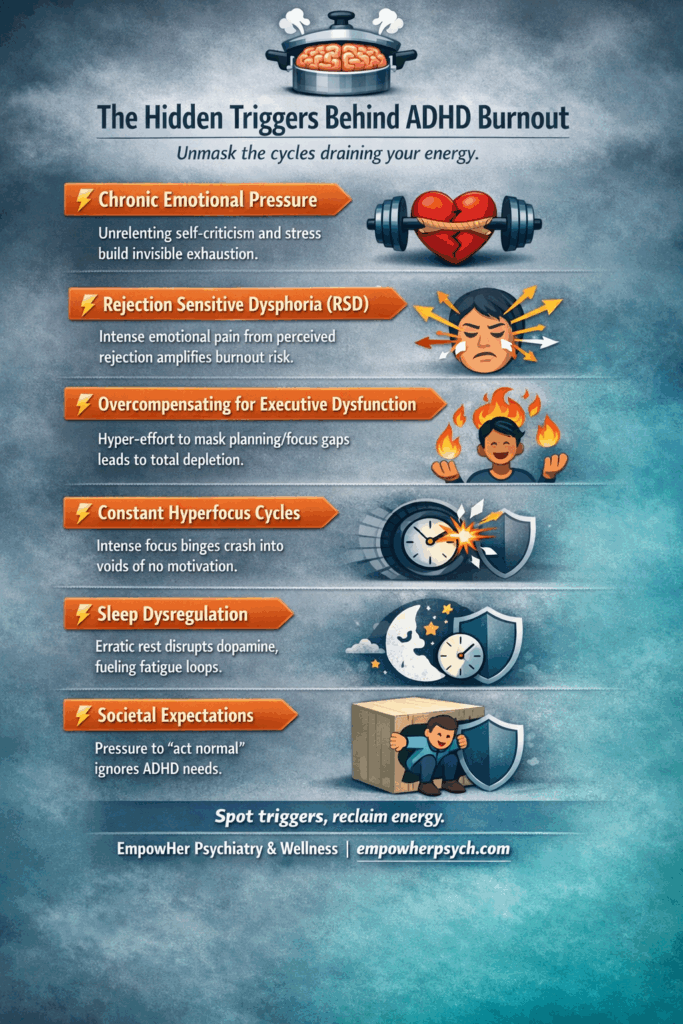
The Hidden Triggers Behind ADHD Burnout
People with ADHD are often creative, passionate, and driven — until they hit a mental wall. Understanding the underlying causes of ADHD burnout can help prevent it before it snowballs.
Here are some of the most common triggers:
- Chronic emotional pressure. Constantly suppressing restlessness, forgetfulness, or impulsivity can lead to “masking fatigue.”
- Rejection Sensitive Dysphoria (RSD). Many adults with ADHD experience intense emotional responses to perceived rejection, amplifying stress and self-doubt.
- Overcompensating for executive dysfunction. Creating complex systems to “stay organized” often adds to the burden rather than reducing it.
- Constant hyperfocus cycles. Alternating between bursts of deep focus and mental collapse drains energy unevenly.
- Sleep dysregulation. Poor sleep quality or delayed sleep cycles worsen attention and mood regulation.
- Societal expectations. Living in a productivity-obsessed culture makes it easy to internalize shame about not being able to keep up.
Recognizing these triggers isn’t a sign of weakness; it’s a form of self-compassion — understanding that ADHD burnout is not laziness or lack of willpower but a sign your brain needs rest and recalibration.
How ADHD Burnout Feels from the Inside
ADHD burnout isn’t just being tired. It’s a total overwhelm of your cognitive and emotional systems. You may:
- Feel foggy or detached even after sleeping.
- Struggle with motivation — even for tasks you once enjoyed.
- Experience emotional numbness or irritability.
- Withdraw from social or family interactions.
- Procrastinate not out of choice, but because your mental energy is gone.
- Wrestle with guilt for “not trying hard enough.”
This internal tug-of-war — between what you want to do and what your brain can handle — can spiral into self-criticism, depression, or anxiety if left unaddressed.
ADHD Burnout vs. Depression: How to Tell the Difference
Because ADHD burnout shares symptoms with depression (like low mood, fatigue, and disinterest), it’s easy to confuse the two. The difference lies in what sparks recovery:
- In ADHD burnout, renewed energy can return when conditions change — such as when you take breaks, receive validation, or reduce external pressures.
- In depression, motivation and pleasure often remain low despite rest or improved circumstances.
It’s possible, of course, to experience both — ADHD increases vulnerability to depression. If symptoms persist for weeks or disrupt daily functioning, consulting a mental health professional is crucial.
The Masking Cycle and Its Role in Burnout
Many individuals with ADHD, especially adults diagnosed later in life, develop a “masking” habit — a set of learned behaviors that cover up ADHD traits to appear more “normal” or productive.
Masking might include:
- Forced enthusiasm during social interactions
- Excessive apologizing for small mistakes
- Over-organizing to hide forgetfulness
- Suppressing stimming behaviors or fidgeting
While useful short-term, masking drains emotional energy and eventually leads to ADHD burnout. The constant vigilance required to maintain this façade consumes mental bandwidth that could otherwise go toward genuine focus, creativity, and rest.
Breaking Free: Recovery Strategies That Actually Help
The good news? ADHD burnout is reversible. You can recover by realigning your lifestyle, habits, and mindset with how your brain naturally works — not against it.
Let’s explore strategies proven to help people rebuild resilience and reclaim joy after burnout.
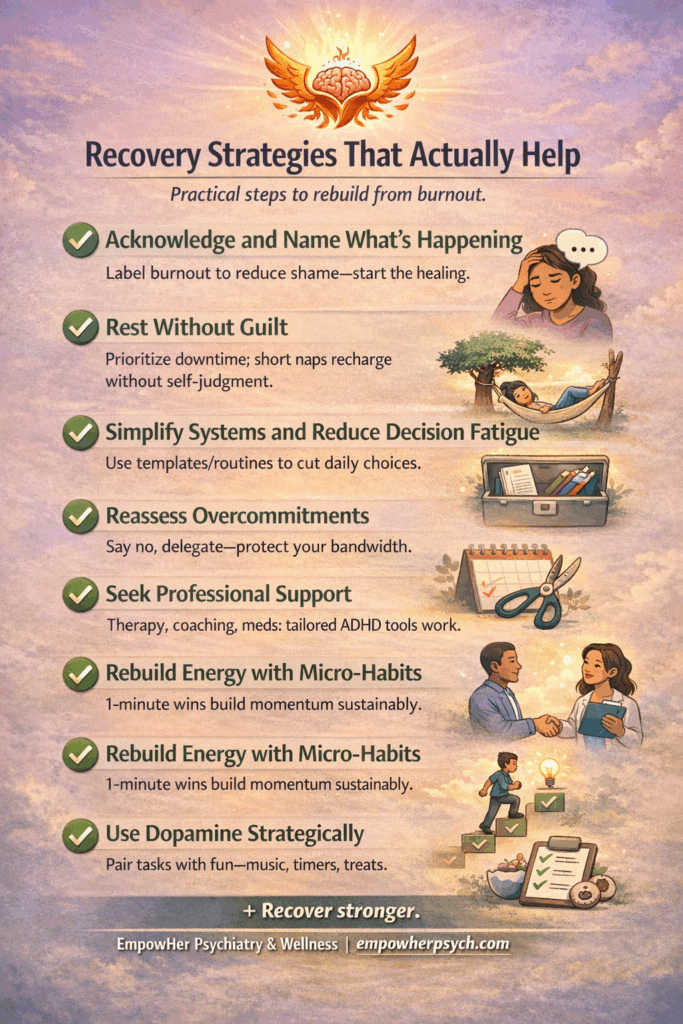
1. Acknowledge and Name What’s Happening
The first step in recovery is self-awareness. Recognize the signs of ADHD burnout early rather than pushing through them. Saying, “I’m experiencing burnout” is powerful — it shifts the focus from self-blame to problem-solving.
2. Rest Without Guilt
Rest isn’t a reward; it’s maintenance. For ADHD brains, restorative downtime often requires more intentional planning.
Practical steps:
- Schedule “buffer days” with no major commitments.
- Replace dopamine-draining scrolling with low-effort hobbies (music, art, walks).
- Protect sleep hygiene — consistent bedtime, minimal screen time, gentle stretching.
3. Simplify Systems and Reduce Decision Fatigue
ADHD brains thrive with clarity and simplicity. Instead of forcing complex to-do apps, try:
- One visible daily planner
- Color-coded task categories
- A whiteboard with your 3 highest priorities each day
Reducing mental clutter lowers stress and creates a sense of momentum — the antidote to burnout paralysis.
4. Reassess Overcommitments
Say “no” without guilt. Whether it’s work, family favors, or volunteer tasks, overextension fuels ADHD burnout faster than almost any other factor. Set boundaries by asking: Does this commitment energize me or drain me?
5. Seek Professional Support
ADHD burnout often improves significantly through therapy — particularly with clinicians experienced in ADHD-specific strategies. Cognitive Behavioral Therapy (CBT), coaching, or medication adjustments can help regulate focus and energy cycles.
It’s also vital to communicate with family members about what burnout looks like for you so they can understand and offer appropriate support rather than unhelpful pressure.
6. Rebuild Energy with Micro-Habits
Instead of massive lifestyle overhauls, adopt micro-habits that align with ADHD brain chemistry:
- Two-minute cleanups to prevent clutter buildup.
- Five-minute mindfulness breaks throughout the day.
- Short walks outdoors for dopamine and mood regulation.
These small actions add up, restoring a sense of control and reducing the helplessness that fuels burnout.
7. Use Dopamine Strategically
Since ADHD involves irregular dopamine regulation, structuring your environment to provide positive stimulation helps prevent burnout relapse. Try:
- Pairing boring tasks with music or snacks.
- Setting small, frequent goals instead of marathon sessions.
- Celebrating progress visibly — checkmarks, boards, or notes.
Dopamine management isn’t indulgence; it’s neurological maintenance.
ADHD Burnout in Families and Loved Ones
If you’re reading this because someone you love is showing signs of ADHD burnout, your understanding can make a world of difference. People recovering from burnout don’t need fixing — they need compassion, validation, and space.
Ways to help include:
- Avoid judgmental phrases like “just try harder” or “everyone forgets sometimes.”
- Offer practical help: meal prep, scheduling support, or quiet companionship.
- Learn about ADHD symptoms so your expectations are realistic.
Remember, burnout isn’t permanent. With patience and support, recovery is not only possible but transformative.
When to Seek Help Immediately
It’s important to draw the line between manageable burnout and a potential mental health crisis. Seek professional help right away if you:
- You can’t get out of bed for several days. This may signal more than exhaustion. When even basic tasks feel impossible, it can indicate depression, severe burnout, or emotional shutdown that requires clinical support.
- You experience intrusive or hopeless thoughts. Persistent thoughts of worthlessness, despair, or feeling like things will never improve are not something you have to manage alone. These thoughts deserve immediate care and compassionate intervention.
- You feel emotionally detached from loved ones. Emotional numbness or disconnection can be a sign of trauma, depression, or nervous system overwhelm. Feeling distant doesn’t mean you don’t care—it often means your mind is protecting itself from overload.
- You lose interest in daily self-care tasks. When eating, bathing, sleeping, or maintaining routines feel overwhelming or unimportant, it may indicate that your mental health needs professional attention beyond self-guided tools.
Reaching out isn’t a sign of failure — it’s the first sign of recovery.

A Final Word
ADHD burnout is real, valid, and conquerable. It’s a signal that your brain—powerful and creative as it is—needs gentler rhythms and new strategies. Healing isn’t about forcing yourself to be “normal”; it’s about structuring life in a way that supports your unique mental landscape.
Remember: your value isn’t measured by productivity. It’s measured by presence, self-awareness, and growth. So take a deep breath. Reassess, reset, and rest—you’ve been running on empty long enough, and it’s time to build a life that fuels you, not drains you.
If ADHD burnout is affecting your daily life, relationships, or sense of self, you don’t have to navigate it alone. At EmpowHer Psychiatry and Wellness, we offer compassionate, women-centered care—including therapy, medication management, and telehealth services—designed to support your brain, not fight it. When you’re ready, we’re here to help you create sustainable systems, restore balance, and move forward with clarity and confidence.
